
The Definitive SaaS Code Audit Guide for Boilerplate Founders
Quick answer
A comprehensive SaaS code audit guide for technical founders, revealing how to critically assess boilerplates for code quality, security, and long-term viability.
Key takeaways
- A SaaS code audit is a critical, non-negotiable due diligence step for developers and founders adopting boilerplates, revealing hidden technical debt and vendor lock-in that superficial evaluations miss.
- Comprehensive audits cover security, code quality, performance, scalability, and compliance, extending beyond basic scans to include architectural integrity and extensibility analysis.
- The ideal time for a boilerplate audit is before significant customization or deployment, enabling early remediation and informed strategic decisions.
- Audits prevent costly security breaches, improve developer productivity, enhance system stability, and safeguard brand reputation, offering a significant return on investment.
- Avoiding pitfalls like inadequate scoping or over-reliance on automated tools, and integrating continuous quality practices, are essential for maximizing an audit's effectiveness and maintaining long-term code health.

The Non-Negotiable Imperative of SaaS Code Audits for Boilerplate Adopters
Dissecting the Anatomy of a SaaS Code Audit: Core Pillars
How Can a SaaS Code Audit Prevent Technical Debt and Vendor Lock-in?
What are the best practices for continuous code quality in SaaS?
The Definitive SaaS Code Audit Guide for Boilerplate Founders
Ryan ThompsonTech Review SpecialistAugust 19, 2026
What is a SaaS code audit guide?
A SaaS code audit guide is a comprehensive resource detailing the process of meticulously examining a Software-as-a-Service application's codebase. It covers security, quality, performance, scalability, and maintainability, specifically emphasizing hidden risks and vendor lock-in for developers and founders adopting SaaS boilerplates. This guide ensures long-term viability and reduces technical debt by providing a structured framework for evaluation and remediation.
A SaaS code audit guide is a comprehensive framework detailing the meticulous examination of a Software-as-a-Service application's underlying source code to identify vulnerabilities, assess quality, and ensure compliance. For developers, technical founders, and engineering teams considering SaaS boilerplates, a rigorous code audit is not merely an optional step but a critical defense against hidden technical debt, undisclosed vendor lock-in, and compromised long-term maintainability, which can undermine the entire promise of accelerated time-to-market. This guide provides the definitive methodology for conducting such an audit, ensuring your boilerplate investment truly serves as a robust foundation.
The Non-Negotiable Imperative of SaaS Code Audits for Boilerplate Adopters
In the competitive landscape of SaaS development, the allure of boilerplates — pre-built foundations promising rapid deployment — is undeniable. However, this perceived shortcut often masks significant long-term risks if not thoroughly vetted. A superficial evaluation, focused solely on listed features or a quick demo, fails to address the fundamental integrity of the underlying code. As Ryan Thompson, a Tech Review Specialist at BestSaaSBoilerplate.com with over a decade of experience in SaaS platform development, frequently emphasizes, true independence and evidence-backed assessments require a deep dive into code quality, maintenance, and potential lock-in. This makes a comprehensive code audit not just advisable, but absolutely essential for any serious founder or engineering team.
Why Boilerplates Demand Deeper Scrutiny
Boilerplates, by their very nature, introduce an external codebase into your project from day one. Unlike building from scratch where you control every line, a boilerplate represents a 'black box' until meticulously examined. This external dependency means inheriting design decisions, coding styles, and potentially, vulnerabilities or inefficiencies that are not immediately apparent. The initial time savings can quickly evaporate if these hidden issues lead to extensive refactoring, security breaches, or performance bottlenecks down the line. A code audit provides the necessary transparency, transforming an unknown quantity into a known, manageable asset.
Many boilerplate vendors make bold claims about security, scalability, and maintainability. Without a professional audit, these claims remain unsubstantiated. Our experience at BestSaaSBoilerplate.com shows that marketing promises often diverge significantly from the reality of the code. For instance, a boilerplate might claim 'enterprise-grade security' but use outdated dependencies or implement weak authentication patterns, which only a detailed audit can expose. This deep scrutiny is paramount for safeguarding your product's future.
The Hidden Costs of Unaudited Boilerplates
The true cost of adopting an unaudited boilerplate extends far beyond the initial purchase price. It encompasses significant technical debt that accumulates over time, often manifesting as slow development cycles, increased bug frequency, and difficulty integrating new features. Security vulnerabilities, if left undiscovered, can lead to data breaches, regulatory fines, and irreparable damage to brand reputation. Moreover, excessive vendor lock-in, through proprietary frameworks or tightly coupled architecture, can severely limit future flexibility, making migration or even simple component upgrades prohibitively expensive. This makes the upfront investment in an audit a critical preventative measure.
Consider a scenario where a SaaS boilerplate, initially chosen for speed, contains subtle architectural flaws that prevent it from scaling beyond a certain user threshold. Discovering this issue after acquiring thousands of users could necessitate a costly, disruptive re-architecture. The cost of fixing such problems post-launch is exponentially higher than identifying and addressing them during the evaluation phase. A study by the National Institute of Standards and Technology (NIST) in 2022 indicated that fixing bugs during the testing phase costs approximately 10 times less than fixing them in production (Source: NIST, 2022). This principle applies directly to the proactive nature of code audits.
Ryan Thompson's Perspective: Beyond Feature Lists
Ryan Thompson's approach at BestSaaSBoilerplate.com is rooted in hands-on testing and transparency. He emphasizes that a boilerplate's true value is not in its feature list, but in the quality, maintainability, and architectural soundness of its code. "Many founders get mesmerized by the promise of 'everything included' and overlook the foundational integrity," Ryan notes. "My decade in SaaS development has shown me that cutting corners on code quality early on inevitably leads to major roadblocks and costly rework later. A code audit is your independent reality check, revealing what's truly beneath the marketing facade." This perspective is crucial for understanding why a deep code audit is indispensable for making an informed boilerplate decision.
Ryan's experience highlights that the most insidious issues are often not immediately visible. These include subtle security misconfigurations, inefficient database queries, or tightly coupled components that appear functional but severely restrict future extensibility. These are the kinds of issues that surface only through a methodical, expert-driven code audit, which goes far beyond what automated tools or a quick developer glance can achieve. The focus shifts from merely 'does it work?' to 'is it built right for the long term?'
What is a SaaS Code Audit and Why is it Essential?
A SaaS code audit is a systematic, in-depth examination of an application's source code, infrastructure configuration, and deployment processes. It evaluates the software against predefined criteria covering security, code quality, performance, scalability, and adherence to best practices. Its essence lies in providing an objective, evidence-based assessment of the codebase's health, identifying potential risks, and offering actionable recommendations for improvement. This process is essential for any SaaS product, but particularly for those built upon third-party boilerplates, where the initial codebase is inherited rather than organically grown.
The goal of a code audit is not to criticize, but to fortify. It acts as a preventive measure, catching critical issues before they escalate into costly problems in production. For founders, it provides peace of mind and concrete data to inform development strategies, resource allocation, and risk management. This proactive stance is a cornerstone of sustainable SaaS growth, ensuring that the technical foundation can support ambitious business goals without compromise.
Defining the Scope: Beyond Basic Security Scans
While security is a paramount concern, a comprehensive SaaS code audit extends far beyond basic vulnerability scanning. It delves into the architectural design, scrutinizes coding standards, evaluates performance bottlenecks, assesses scalability potential, and examines compliance with regulatory requirements. For example, a basic security scan might flag an unpatched library, but a full audit would also evaluate whether the application's authentication flow is robust, if sensitive data is handled securely throughout its lifecycle, and if the overall architecture promotes a secure-by-design approach. The scope must be meticulously defined to cover all facets critical to your SaaS product's success.
An effective audit considers the entire software ecosystem. This includes not only the application code itself but also database schemas, API integrations, cloud infrastructure configurations (e.g., AWS, Azure, GCP), CI/CD pipelines, and even documentation quality. Each component represents a potential point of failure or inefficiency. A holistic approach ensures that no stone is left unturned, providing a truly robust assessment of the system's readiness for production and growth.
Key Objectives of a Comprehensive Audit
The primary objectives of a comprehensive SaaS code audit are multifaceted. Firstly, it aims to identify security vulnerabilities that could be exploited by malicious actors, ranging from common injection flaws to complex logical vulnerabilities. Secondly, it seeks to assess code quality and maintainability, ensuring the codebase is readable, well-structured, and easy to modify, which directly impacts developer productivity and future feature development. Thirdly, audits evaluate performance and scalability, identifying bottlenecks that could hinder user experience or prevent the application from handling increased load. Fourthly, they examine compliance with industry standards and regulations, crucial for legal adherence and customer trust. Finally, for boilerplate users, a critical objective is to uncover vendor lock-in risks and evaluate extensibility, ensuring the platform remains flexible for future business needs.
Each objective directly contributes to the long-term health and success of the SaaS product. For instance, addressing security vulnerabilities proactively prevents costly breaches, while improving code quality reduces the effort required for maintenance and new feature development. Understanding scalability limitations before they impact users allows for strategic infrastructure planning. Ultimately, a code audit provides a clear roadmap for technical improvements that align with business goals.
When is the Right Time to Conduct an Audit?
The optimal time to conduct a SaaS code audit is highly strategic and can occur at several key junctures in a product's lifecycle. For boilerplate adopters, the absolute best time is before significant customization or deployment. This allows for critical issues to be addressed at the earliest, least expensive stage, preventing fundamental flaws from becoming deeply embedded. A pre-adoption audit helps in making an informed purchase decision and negotiating with boilerplate vendors. Additionally, audits are crucial:
Before a major funding round: Investors conduct technical due diligence, and a clean audit report demonstrates technical maturity and reduces perceived risk.
Prior to a large-scale launch or scaling event: To ensure the system is robust enough to handle increased user load and data.
After significant feature development or architectural changes: To catch new vulnerabilities or technical debt introduced.
Periodically (e.g., annually): As part of a continuous security and quality improvement program, especially critical for evolving SaaS platforms.
For SaaS platforms dealing with sensitive data, continuous auditing or regular, scheduled audits are non-negotiable. The landscape of threats and best practices evolves rapidly, requiring ongoing vigilance. Many regulatory frameworks, such as SOC 2, implicitly require periodic assessments of internal controls, which a code audit directly supports.
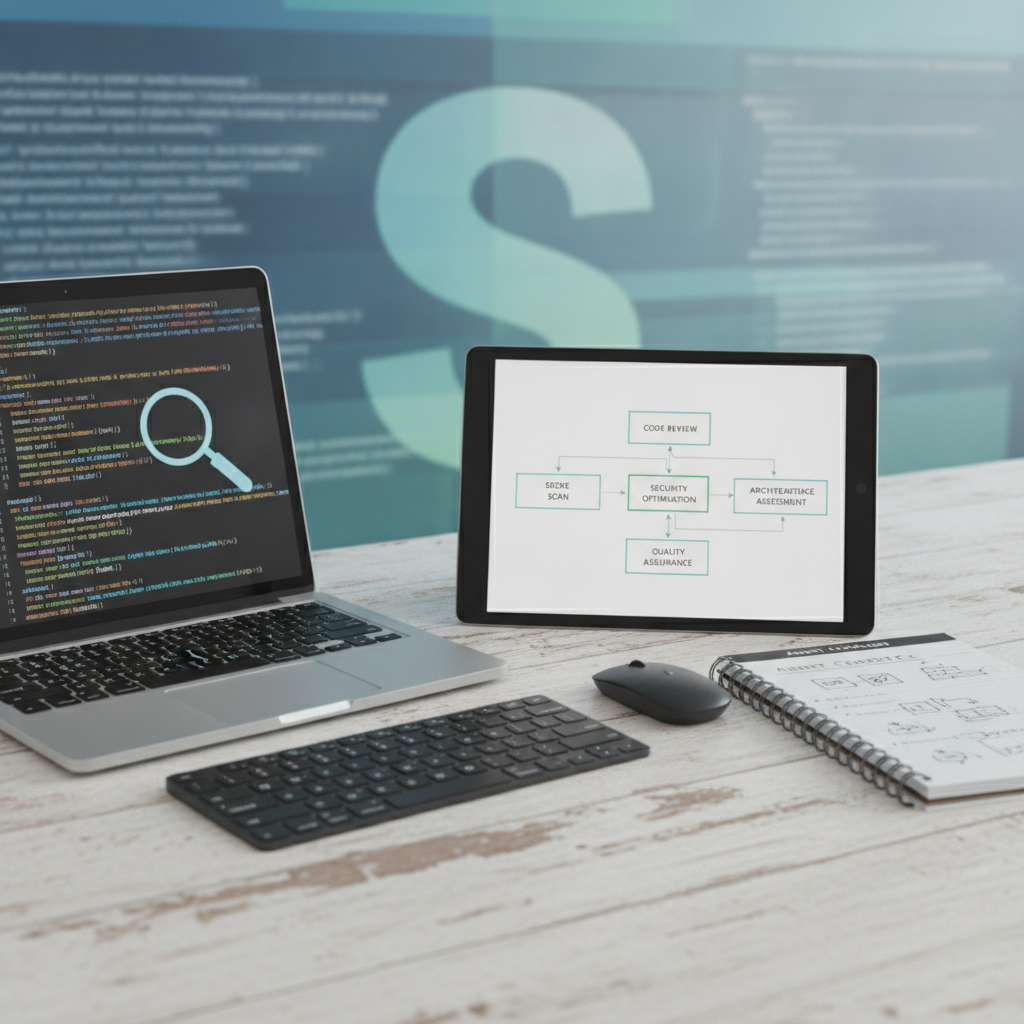
Dissecting the Anatomy of a SaaS Code Audit: Core Pillars
A comprehensive SaaS code audit is structured around several critical pillars, each addressing a distinct aspect of the application's health and readiness. These pillars work in concert to provide a holistic view, uncovering issues that individual checks might miss. For boilerplate users, understanding these pillars helps in framing specific questions to vendors and focusing the audit on areas most susceptible to inherited problems.
Pillar 1: Security Vulnerability Assessment
Security is arguably the most critical component of any SaaS code audit. It involves a systematic review of the codebase to identify weaknesses that could lead to unauthorized access, data breaches, or service disruption. This pillar often employs a combination of automated tools and manual review by experienced security engineers. The objective is to identify both known vulnerabilities (e.g., outdated libraries with published CVEs) and logical vulnerabilities specific to the application's business logic.
A robust security assessment goes beyond merely scanning for common issues; it probes the application's authentication mechanisms, authorization controls, data encryption strategies, and secure coding practices. It also evaluates how the application interacts with its environment, including external APIs, databases, and cloud services. The goal is to build a comprehensive threat model and ensure the application's defenses are proportionate to the risks it faces.
Common SaaS Security Risks
SaaS applications face a unique set of security challenges due to their multi-tenant nature, reliance on cloud infrastructure, and extensive use of third-party integrations. Common risks include insecure APIs, misconfigured cloud resources, inadequate identity and access management (IAM), data leakage across tenants, and supply chain vulnerabilities from third-party libraries. Phishing and social engineering attacks targeting SaaS users are also prevalent, making robust user authentication and session management critical. A 2023 report by the Cloud Security Alliance found that over 60% of organizations experienced a public cloud security incident within the past year (Source: Cloud Security Alliance, 2023).
For boilerplate-based SaaS, these risks are amplified if the boilerplate itself introduces vulnerabilities or adheres to lax security standards. For instance, a boilerplate might include default credentials, insecure session handling, or expose internal service endpoints, which an audit must immediately flag. Understanding these common risks helps auditors focus their efforts on the most probable attack vectors.
OWASP Top 10 and Beyond
The OWASP Top 10 provides a standard awareness document for developers and web application security. It lists the most critical web application security risks. A SaaS code audit systematically checks for these, including Injection, Broken Authentication, Sensitive Data Exposure, XML External Entities (XXE), Broken Access Control, Security Misconfiguration, Cross-Site Scripting (XSS), Insecure Deserialization, Using Components with Known Vulnerabilities, and Insufficient Logging & Monitoring (Source: OWASP Foundation, 2023). However, a truly comprehensive audit goes beyond the OWASP Top 10, considering advanced threats, business logic flaws unique to the application, and vulnerabilities specific to the chosen technology stack.
For example, a boilerplate might handle multi-tenancy incorrectly, allowing one tenant to access another's data, which isn't explicitly an OWASP Top 10 item but is a critical SaaS-specific vulnerability. The audit should also assess defenses against DDoS attacks, API abuse, and container security if the application uses microservices or serverless functions. This layered approach ensures that both general and specific threats are addressed.
Data Privacy and Compliance Considerations
Data privacy is intertwined with security, especially for SaaS applications handling personal or sensitive information. An audit assesses how data is collected, stored, processed, and transmitted, ensuring adherence to regulations like GDPR, CCPA, HIPAA, and industry-specific standards. This includes evaluating data encryption at rest and in transit, data retention policies, consent management, and the implementation of privacy-by-design principles. Non-compliance can lead to hefty fines and reputational damage.
For boilerplate users, it's crucial to verify that the boilerplate's default data handling mechanisms align with your target compliance requirements. Does it provide hooks for consent management? Are its data models inherently privacy-friendly? An audit helps bridge the gap between generic boilerplate functionality and specific regulatory obligations, ensuring your SaaS product is legally sound and trustworthy.
Pillar 2: Code Quality and Maintainability Analysis
Code quality and maintainability are crucial for the long-term viability and development velocity of any SaaS product. A high-quality codebase reduces technical debt, simplifies debugging, accelerates feature development, and lowers the cost of ownership. This pillar examines the structural integrity, readability, consistency, and overall health of the source code. For boilerplate adopters, this is where the hidden costs of a poorly constructed foundation become most apparent, impacting every subsequent development effort.
An audit in this area looks at adherence to coding standards, effective use of design patterns, modularity, test coverage, and documentation. It's about ensuring that the code is not just functional, but also robust, extensible, and easy for new developers to understand and contribute to. Poor code quality can manifest as 'spaghetti code', making even minor changes fraught with risk and consuming excessive developer time.
Readability and Documentation
Readable code with comprehensive documentation is a hallmark of a maintainable application. An audit assesses whether the code follows consistent naming conventions, includes meaningful comments where necessary, and is logically structured. It also reviews the presence and quality of internal documentation (e.g., README files, architectural diagrams, API documentation), ensuring that new team members or future developers can quickly grasp the system's complexities without extensive hand-holding. Lack of documentation is a major contributor to technical debt and slows down onboarding significantly.
For boilerplates, documentation is often a weak point. Vendors may prioritize features over thorough explanations of architectural choices, complex modules, or customization points. An audit can identify these gaps, providing a clear mandate for improving documentation before it becomes a bottleneck for your team. This includes not just inline comments but also high-level architectural overviews and setup guides.
Architectural Integrity and Design Patterns
The architectural integrity of a SaaS application determines its scalability, resilience, and extensibility. This audit aspect scrutinizes the overall system design, evaluating whether appropriate design patterns have been applied, if responsibilities are clearly separated (e.g., using a microservices or modular monolith approach), and if the architecture supports future growth without requiring fundamental overhauls. It examines dependency management, module coupling, and adherence to principles like SOLID.
Boilerplates can sometimes impose architectural constraints that are not suitable for your specific use case or future vision. An audit evaluates whether the boilerplate's architecture is flexible enough to accommodate your evolving needs or if it locks you into a rigid structure. For instance, a boilerplate might use a tightly coupled monolithic design when your business requires the flexibility of a more distributed system. Identifying these architectural misalignments early is critical for long-term strategic planning.
Scalability and Performance Bottlenecks
SaaS applications must be designed for scalability to handle increasing user loads and data volumes. This part of the audit identifies potential performance bottlenecks (e.g., inefficient database queries, unoptimized algorithms, excessive API calls) and assesses the application's ability to scale horizontally and vertically. It considers resource utilization, caching strategies, and load balancing configurations. Performance issues directly impact user experience and can lead to customer churn.
Many boilerplates are built for general use and may not have undergone rigorous performance testing or optimization for high-scale scenarios. An audit specifically for a boilerplate will look for common performance pitfalls such as N+1 query problems, inefficient data structures, or synchronous operations that should be asynchronous. It helps ensure that the boilerplate provides a performant foundation that won't crumble under the weight of success.
Technical Debt Identification
Technical debt refers to the long-term consequences of choosing an easy but suboptimal solution now, which will incur extra development work later. An audit systematically identifies areas of technical debt, such as deprecated code, inconsistent patterns, poor error handling, lack of automated tests, or complex, unrefactored modules. Quantifying technical debt allows teams to prioritize refactoring efforts and make informed decisions about future development.
Boilerplates can be significant sources of inherited technical debt. A vendor might have made expedient choices to deliver a feature-rich product quickly, leaving behind suboptimal code that you then inherit. An audit provides a clear inventory of this debt, enabling you to factor remediation costs into your development budget and avoid unpleasant surprises. It helps you understand the true cost of ownership beyond the initial purchase.
Pillar 3: Performance and Efficiency Review
Beyond general scalability, a dedicated focus on performance and efficiency ensures that the SaaS application delivers a snappy, responsive user experience while minimizing operational costs. This pillar meticulously examines the application's resource consumption, processing speed, and latency characteristics. It’s about optimizing every millisecond and every byte to maximize user satisfaction and cost-effectiveness.
Performance issues can manifest in various forms, from slow page loads to delayed API responses, all of which degrade user experience and can lead to higher bounce rates. For a SaaS business, efficient resource utilization directly translates to lower cloud hosting bills, making this a critical area for audit focus. This pillar moves beyond theoretical scalability to practical, real-world performance implications.
Database Query Optimization
The database is often the bottleneck in SaaS applications. This audit component reviews database schema design, indexing strategies, and the efficiency of SQL queries (or NoSQL operations). It identifies long-running queries, unoptimized joins, and potential deadlocks. Recommendations often include adding appropriate indexes, rewriting inefficient queries, or implementing caching layers. Poorly optimized queries can bring even the most powerful servers to their knees during peak loads.
Boilerplates often come with pre-designed database schemas and ORM (Object-Relational Mapping) usage patterns. An audit critically evaluates if these are optimized for your expected data volume and access patterns. A boilerplate's generic schema might not be suitable for your specific data relationships, leading to performance degradation as your dataset grows. Identifying these early can save significant refactoring efforts and downtime.
API Latency and Responsiveness
In modern SaaS, APIs are the backbone of communication, both internally and externally. This audit aspect measures the latency of key API endpoints and assesses the overall responsiveness of the application's various services. It looks for synchronous blocking calls, excessive data transfer, and inefficient serialization/deserialization processes. High API latency can severely degrade the user experience, especially for single-page applications or mobile clients.
For boilerplate users, the API design and implementation are critical. Does the boilerplate provide RESTful APIs that are well-documented and performant? Are there unnecessary layers of abstraction that introduce overhead? An audit probes these areas, ensuring that the boilerplate's API layer is robust, efficient, and ready to support your front-end applications and third-party integrations effectively.
Resource Utilization
Efficient resource utilization (CPU, memory, disk I/O, network bandwidth) is directly linked to operational costs and environmental impact. This part of the audit analyzes how the application consumes these resources, identifying areas of waste or inefficiency. This might involve profiling memory leaks, excessive garbage collection, or redundant computations. Optimizing resource usage can lead to substantial savings on cloud infrastructure, a major cost for many SaaS companies.
A boilerplate might come with default configurations or libraries that are not optimized for resource efficiency. For example, it might use a heavy framework when a lighter one would suffice, or include unnecessary background processes. An audit can pinpoint these areas, allowing for targeted optimizations that reduce your cloud spend and improve overall system sustainability. According to a 2024 survey by Flexera, optimizing cloud costs remains a top priority for 89% of enterprises (Source: Flexera, 2024).
Pillar 4: Scalability and Future-Proofing Evaluation
Scalability is a fundamental requirement for any successful SaaS application, ensuring it can gracefully handle growth in users, data, and features without performance degradation. Future-proofing, on the other hand, assesses the application's ability to adapt to new technologies, business requirements, and market shifts without requiring a complete rewrite. This pillar delves into the architectural choices, infrastructure readiness, and third-party dependencies that dictate the application's long-term viability.
For a boilerplate, this evaluation is crucial. The core architecture dictates how easily you can scale, add new services, or integrate with emerging platforms. A boilerplate that is not designed with future growth in mind can quickly become a bottleneck, negating the initial speed advantage it offered. This audit area helps confirm whether the boilerplate is a stepping stone or a potential dead end.
Infrastructure Readiness
An audit evaluates whether the application's architecture is compatible with modern, scalable cloud infrastructure. This includes assessing containerization (e.g., Docker, Kubernetes) readiness, serverless compatibility, and the use of managed services (e.g., managed databases, message queues). It also looks at load balancing, auto-scaling configurations, and disaster recovery mechanisms. An application might perform well on a small server, but its infrastructure readiness determines its ability to handle enterprise-level traffic.
Many boilerplates offer pre-configured deployment scripts or infrastructure-as-code. An audit should verify that these configurations are robust, secure, and scalable, rather than just basic examples. It should also check for portability across different cloud providers, reducing potential cloud vendor lock-in. A well-designed boilerplate should offer flexibility in deployment environments, not rigidity.
Microservices vs. Monolith Considerations
This aspect of the audit critically examines the architectural style chosen for the SaaS application, particularly relevant for boilerplates that often provide a default structure. Whether it's a monolithic application or a microservices-based architecture, the audit assesses its appropriateness for the envisioned scale and complexity. For monoliths, it checks for clear module boundaries and readiness for potential future decomposition. For microservices, it evaluates service independence, communication patterns, data consistency, and operational overhead. The choice of architecture has profound implications for development velocity, team structure, and operational complexity.
A boilerplate might present a monolithic structure that, while simpler initially, could hinder independent scaling of components or team autonomy in the long run. Conversely, a microservices boilerplate might introduce unnecessary complexity for a simple MVP. The audit helps determine if the boilerplate's architectural choice aligns with your product's strategic needs, ensuring it can evolve without constant friction.
Third-Party Integrations and Dependencies
Modern SaaS applications heavily rely on third-party libraries, APIs, and services (e.g., payment gateways, CRM integrations, analytics tools). This audit component assesses the quality, security, and maintainability of these integrations and dependencies. It checks for outdated libraries, insecure API keys, tight coupling with external services, and potential single points of failure. Managing third-party dependencies effectively is crucial for both security and long-term stability.
For boilerplates, the dependency tree can be extensive. An audit should scrutinize every third-party component included, checking for known vulnerabilities, active maintenance, and licensing compatibility. It's not uncommon for boilerplates to include abandoned libraries or insecure versions, which you would unknowingly inherit. This part of the audit is vital for understanding your supply chain risk and ensuring that your external integrations are robust and future-proof.
Pillar 5: Vendor Lock-in and Extensibility Analysis
This pillar is particularly critical for technical founders and engineering teams evaluating SaaS boilerplates, as it directly addresses the potential for long-term strategic restrictions. Vendor lock-in occurs when reliance on a specific vendor's proprietary technology or tightly coupled services makes it difficult or costly to switch to an alternative or to customize beyond predefined boundaries. Extensibility, conversely, refers to the ease with which the application can be modified, extended, or integrated with new features and systems. An audit here aims to identify and mitigate future constraints.
Ryan Thompson's work at BestSaaSBoilerplate.com explicitly focuses on assessing lock-in and honesty of claims. He advocates for deep analysis of boilerplates to ensure developers aren't inadvertently committing to a path that limits their future options. This audit section uncovers whether the boilerplate is a flexible foundation or a golden cage.
Proprietary Frameworks and Libraries
A key area of vendor lock-in assessment involves examining the use of proprietary frameworks, libraries, or components within the boilerplate. While some proprietary tools can offer specific advantages, an over-reliance can tie your product to a single vendor's ecosystem, making future migrations or custom development outside that ecosystem extremely difficult. The audit identifies these proprietary elements and evaluates the availability of open-source alternatives or clear migration paths.
For boilerplate users, this means asking: Is the core of the boilerplate built on standard, open-source technologies, or does it lean heavily on custom, undocumented, or niche proprietary code? A boilerplate that tightly couples your application logic to its unique, proprietary components inherently creates lock-in. An audit identifies the degree of this coupling and advises on strategies to mitigate it, such as encapsulating proprietary code within well-defined interfaces.
Data Portability and Exit Strategies
Data is the lifeblood of any SaaS application. An audit assesses the ease of data portability – how readily data can be exported in a standard, usable format, and whether the boilerplate's data model is generic enough to be understood outside its specific context. It also considers potential exit strategies from the boilerplate itself: how difficult would it be to extract your custom logic and data if you decided to move away from the boilerplate entirely? This includes evaluating database schemas, API export capabilities, and data storage formats.
A boilerplate should ideally utilize standard database technologies and provide clear mechanisms for data export. If the boilerplate uses a highly specialized or undocumented data storage mechanism, or if its data models are overly complex and intertwined with its internal logic, it represents a significant lock-in risk. The audit provides clarity on your data ownership and mobility, which is crucial for business continuity and regulatory compliance.
Customization Limitations
While boilerplates offer a starting point, most SaaS products require significant customization to meet unique business needs. This audit aspect evaluates the boilerplate's extensibility points, API design for customization, and overall flexibility. Does the architecture allow for easy addition of new features without deeply modifying core boilerplate code? Are there clear extension mechanisms (e.g., hooks, plugins, modular components) or does customization require extensive monkey-patching or violating the boilerplate's intended structure? Limitations in customization can significantly hamper product differentiation and future growth.
For boilerplate evaluation, this is a make-or-break factor. A boilerplate that is rigid and difficult to extend will quickly become a liability, forcing you into expensive workarounds or even a complete rebuild. The audit provides an objective assessment of the boilerplate's true extensibility, helping you understand the practical limits of what you can build on top of it without incurring excessive technical debt or breaking future updates from the boilerplate vendor.
Pillar 6: Compliance and Regulatory Adherence
In an increasingly regulated digital world, ensuring your SaaS application adheres to relevant data privacy laws, industry standards, and geographical regulations is non-negotiable. Non-compliance can lead to severe legal penalties, significant financial fines, and devastating reputational damage. This pillar of the audit systematically reviews the application's design, data handling practices, and operational processes against specific compliance mandates. It's about building trust and operating legally within your target markets.
For boilerplates, it's essential to understand that a generic boilerplate cannot be 'compliant' out-of-the-box for every scenario. Compliance is context-dependent. The audit focuses on whether the boilerplate provides the necessary architectural hooks and best practices to *enable* your application to become compliant, rather than assuming it already is. This is a crucial distinction for developers and founders.
GDPR, CCPA, HIPAA, SOC 2
These are some of the most prominent regulatory frameworks that SaaS applications often need to address: GDPR (General Data Protection Regulation) for European Union citizens, CCPA (California Consumer Privacy Act) for California residents, HIPAA (Health Insurance Portability and Accountability Act) for protected health information in the US, and SOC 2 (Service Organization Control 2) for demonstrating robust internal controls related to security, availability, processing integrity, confidentiality, and privacy. An audit assesses the code's readiness for these, including data encryption, access controls, logging, data deletion procedures, and consent management features.
For a boilerplate, the audit must determine if it contains any inherent design flaws that make achieving compliance difficult or impossible. For example, does the boilerplate log sensitive user data unnecessarily? Does it provide clear mechanisms for users to request data deletion or access? Does it support multi-factor authentication (MFA) required by many compliance standards? These foundational elements must be in place or easily implementable within the boilerplate's structure.
Industry-Specific Standards
Beyond broad regulations, many industries have their own specific compliance standards. For example, financial services might need to adhere to PCI DSS (Payment Card Industry Data Security Standard) if handling card data directly, or specific banking regulations. Healthcare applications might need to comply with additional regional health data laws beyond HIPAA. Manufacturing or critical infrastructure SaaS solutions might face specific cybersecurity requirements. An audit tailored to your industry will incorporate these specialized checks.
When selecting a boilerplate, it's rare to find one that is pre-certified for a niche industry standard. The audit's role is to evaluate whether the boilerplate's architectural components and coding practices are flexible enough to be adapted to these specific requirements without extensive, risky modifications. This proactive analysis ensures that the boilerplate supports, rather than hinders, your path to full industry compliance.
The Step-by-Step SaaS Code Audit Process
Conducting a thorough SaaS code audit requires a structured, methodical approach to ensure all critical areas are covered and findings are actionable. This step-by-step guide outlines the typical lifecycle of a comprehensive audit, from initial planning to final verification. Following these steps systematically minimizes oversight and maximizes the value derived from the audit, especially when evaluating a boilerplate.
Step 1: Define Objectives and Scope
Before any code is reviewed, clearly articulate what you want to achieve with the audit and precisely what parts of the system will be examined. Are you primarily concerned with security, performance, maintainability, or a combination? What specific modules, functionalities, or third-party integrations are in scope? For boilerplate users, specify areas like potential vendor lock-in points, customization extensibility, and specific compliance requirements. A well-defined scope prevents mission creep and ensures the audit delivers targeted, relevant insights.
In this initial phase, gather all relevant documentation, including architectural diagrams, design specifications, deployment plans, and any existing security policies. Clearly communicate the business context and any known pain points or areas of concern. This foundational step ensures that the audit team is aligned with your strategic goals and can focus their efforts efficiently.
Step 2: Assemble the Audit Team (Internal vs. External)
Decide whether to conduct the audit with an internal team, an external firm, or a hybrid approach. Internal teams offer deep domain knowledge and context but may lack specialized audit expertise or independent perspective. External audit firms bring specialized skills, industry best practices, and an unbiased viewpoint, crucial for identifying blind spots. For boilerplate evaluations, an external team specializing in code quality and security reviews can provide invaluable, objective insights into the vendor's claims.
When selecting an external firm, look for credentials, relevant experience with your technology stack, and a proven methodology. Ensure they understand the unique challenges of boilerplate adoption, such as assessing inherited technical debt and potential lock-in. A good audit team possesses both automated tool proficiency and strong manual code review skills, essential for uncovering complex logical flaws.
Step 3: Tools and Methodologies for Code Analysis
Equip the audit team with the right tools and define the methodologies they will employ. This typically includes a combination of: Static Application Security Testing (SAST) tools for analyzing source code without executing it, identifying potential vulnerabilities and coding standard violations; Dynamic Application Security Testing (DAST) tools for interacting with the running application to find vulnerabilities; Software Composition Analysis (SCA) tools for identifying open-source components and their known vulnerabilities; and Manual Code Review by human experts, which is indispensable for uncovering business logic flaws and architectural issues that automated tools often miss. The choice of tools should align with the technology stack of your boilerplate.
Beyond security tools, consider code quality analysis tools (e.g., SonarQube, ESLint) for maintainability and adherence to coding standards. Performance profiling tools are also essential for identifying bottlenecks. The methodology should include a clear process for documenting findings, categorizing issues by severity, and tracking remediation efforts. A structured approach ensures consistency and thoroughness.
Step 4: Execute the Audit (Static, Dynamic, Manual Reviews)
This is the core phase where the actual code examination takes place. The team will perform: Static Analysis, running SAST and SCA tools across the entire codebase to quickly identify common vulnerabilities and outdated dependencies; Dynamic Analysis, where DAST tools and penetration testers interact with the running application to discover runtime vulnerabilities; and most critically, Manual Code Review, where experienced developers systematically examine code sections, particularly complex logic, authentication flows, and data handling routines, for subtle flaws that automated tools cannot detect. This iterative process often involves communication with the boilerplate vendor (if applicable) for clarifications.
During this phase, the audit team should be provided with necessary access to the codebase, development environment, and any required credentials (under strict non-disclosure agreements). Regular check-ins with stakeholders can help clarify ambiguities and ensure the audit remains on track. For boilerplate users, this phase is where the 'black box' truly begins to open, revealing the underlying realities of the code.
Step 5: Document Findings and Prioritize Issues
Upon completion of the analysis, all findings must be meticulously documented. This includes a clear description of each identified issue, its location in the code, the potential impact (e.g., data breach, performance degradation), and evidence of its existence. Issues should be categorized by severity (e.g., Critical, High, Medium, Low) and prioritized based on their risk level and potential impact on business operations. A comprehensive audit report is the primary deliverable of this stage.
For boilerplate-specific issues, clearly differentiate between problems inherited directly from the boilerplate and those introduced by your customizations. This distinction is crucial for understanding responsibility and for future discussions with the boilerplate vendor. The prioritization process should involve business stakeholders to ensure that remediation efforts align with overall company risk tolerance and strategic goals.
Step 6: Remediation Planning and Verification
The final step involves developing a clear, actionable remediation plan for all identified issues, especially those categorized as high or critical severity. This plan should outline the specific steps required to fix each issue, assign responsibilities to team members, and set realistic deadlines. Once remediation efforts are complete, it is crucial to conduct a verification step to confirm that the issues have indeed been resolved and no new vulnerabilities have been introduced. This often involves re-running relevant tests or a focused re-audit of the affected areas.
For boilerplate users, this step might involve discussions with the boilerplate vendor about critical issues discovered, especially if they represent fundamental flaws that impact other users. The remediation plan should integrate into your existing development lifecycle. Continuous monitoring and periodic re-audits are recommended to maintain a high level of code quality and security over time, transforming a one-time audit into an ongoing commitment to excellence.
What Are the Key Deliverables of a SaaS Code Audit?
The output of a professional SaaS code audit is more than just a list of problems; it is a strategic asset that informs decision-making, mitigates risk, and guides future development. Understanding the core deliverables helps founders and engineering teams set clear expectations and maximize the return on their audit investment. These deliverables provide a comprehensive overview of the application's health and a roadmap for actionable improvements.
Comprehensive Audit Report
The centerpiece of any code audit is a detailed, well-structured audit report. This document summarizes the audit's scope, methodology, and key findings. It typically includes an executive summary for high-level stakeholders, followed by granular details for technical teams. The report should clearly describe each identified vulnerability or issue, its severity, potential impact, and a clear path to reproduction (if applicable). For boilerplate users, the report should highlight issues directly attributable to the boilerplate versus those introduced by customization.
The report also provides context, explaining why certain issues are critical and referencing relevant industry standards or best practices. It's a foundational document that serves as a single source of truth for the codebase's current state, enabling informed discussions and strategic planning. A well-written report avoids jargon where possible and clearly communicates complex technical issues to both technical and non-technical audiences.
Prioritized Recommendations
Beyond simply listing issues, a valuable audit report provides prioritized recommendations for remediation. These recommendations are actionable steps that technical teams can follow to address each finding. Prioritization is crucial, categorizing issues by their severity (e.g., critical, high, medium, low) and the effort required to fix them, allowing teams to focus on the most impactful changes first. For example, a critical authentication bypass vulnerability will receive higher priority than a minor coding style inconsistency.
For boilerplate-derived issues, recommendations might include specific refactoring suggestions, alternative library choices, or architectural adjustments to mitigate vendor lock-in. The recommendations should be practical, considering the existing technology stack and business constraints, providing a clear path forward rather than abstract advice.
Actionable Remediation Plan
Building upon the prioritized recommendations, a comprehensive audit often includes or facilitates the creation of an actionable remediation plan. This plan maps specific recommendations to concrete tasks, assigns responsibilities, and sets realistic timelines for implementation. It serves as a project plan for addressing the identified issues, integrating seamlessly into existing development workflows. The plan should also consider dependencies between fixes, ensuring a logical sequence of work.
For boilerplate adopters, this plan is vital for incorporating necessary fixes into their development roadmap without disrupting their initial product launch schedule. It helps in allocating resources effectively and tracking progress towards a more secure and robust application. The plan should also include strategies for validating the fixes to ensure they are effective and do not introduce new problems.
Post-Audit Verification
While not always a separate document, post-audit verification is a critical deliverable that ensures the audit's value is realized. This involves a follow-up assessment, often a focused re-audit or re-testing of the remediated areas, to confirm that all critical and high-priority issues have been effectively addressed. This step provides assurance that the application is indeed more secure, performant, and maintainable. It closes the loop on the audit process, confirming that the investment has yielded tangible improvements.
For a boilerplate-based project, verification confirms that the inherited flaws have been neutralized, allowing the development team to build upon a truly solid foundation. This verification step is a testament to the trustworthiness of the audit process and provides concrete evidence of improved code health, which can be valuable for compliance reporting or investor relations.
Choosing the Right SaaS Code Audit Partner or Approach
The decision of who conducts your SaaS code audit is as crucial as the audit itself. The right partner brings not only technical expertise but also an understanding of your business context, technology stack, and specific challenges, particularly when integrating a boilerplate. This choice impacts the depth, accuracy, and actionable nature of the audit findings. Founders and engineering leaders must carefully weigh the pros and cons of internal versus external approaches.
Internal Audit Teams: Pros and Cons
Utilizing an internal team for a code audit offers several advantages. They possess deep familiarity with the codebase, business logic, and historical context of decisions. This intimate knowledge can accelerate the identification of certain issues and facilitate quicker remediation. Internal teams also typically have a stronger sense of ownership and can integrate findings directly into ongoing development sprints. However, internal audits can suffer from a lack of fresh perspective, potential bias (developers auditing their own code), and a possible deficit in specialized security or architectural audit expertise. They might also be constrained by existing workload, delaying the audit process.
For boilerplate users, an internal team might struggle to objectively assess the boilerplate's foundational quality, especially if they lack experience with diverse boilerplate architectures or have an emotional investment in the chosen product. While cost-effective, the potential for overlooking critical flaws due to familiarity or limited specialized knowledge is a significant drawback. According to a 2021 study by Cybersecurity Ventures, the cost of a data breach can be significantly higher when security issues are not identified early by independent experts (Source: Cybersecurity Ventures, 2021).
External Audit Firms: When and Why
Engaging an external audit firm is often the preferred choice for comprehensive SaaS code audits, especially for critical systems or when evaluating third-party code like boilerplates. External firms bring specialized expertise, a fresh, unbiased perspective, and a deep understanding of industry best practices and emerging threats. They are typically equipped with advanced tools and methodologies, and their findings often carry more weight for investors, compliance bodies, and customers. Their independence ensures an objective assessment of the codebase's health, free from internal politics or assumptions.
External audits are particularly recommended: for pre-production boilerplate evaluations, before significant funding rounds or major product launches, for compliance certifications (e.g., SOC 2), or when a high level of security assurance is required. While potentially more expensive, the value of an independent, expert assessment in mitigating long-term risks often far outweighs the upfront cost. Look for firms with strong references, clear methodologies, and a track record in SaaS development and security.
Special Considerations for Boilerplate Audits
Auditing a SaaS boilerplate presents unique challenges that demand specific considerations. Firstly, the audit must differentiate between issues inherent to the boilerplate and those introduced by your team's customizations. This requires clear version control and potentially collaboration with the boilerplate vendor for clarity on their design choices. Secondly, the audit should place extra emphasis on areas susceptible to vendor lock-in, extensibility, and long-term maintainability, as these are often the hidden pitfalls of boilerplate adoption. Thirdly, assessing the boilerplate's update strategy and community support is vital for understanding its future viability.
As platforms like BestSaaSBoilerplate.com demonstrate, the evaluation of boilerplates requires a dedicated focus on code quality, maintenance, and honesty of claims. An audit for a boilerplate should therefore prioritize evaluating the underlying architectural decisions, dependency management, and adherence to security best practices that ensure it's a truly robust and flexible foundation, not merely a feature showcase. The auditor should ideally have experience with various boilerplate patterns and their common shortcomings.
How Can a SaaS Code Audit Prevent Technical Debt and Vendor Lock-in?
Technical debt and vendor lock-in are two of the most insidious long-term threats to a SaaS product's agility, cost-effectiveness, and strategic independence. A comprehensive code audit acts as a powerful preventative mechanism against both, especially when integrating a boilerplate. By proactively identifying and addressing these issues, an audit ensures that your initial foundation remains flexible and sustainable, rather than becoming a future impediment. This proactive approach saves significant time and resources in the long run.
Proactive Debt Identification
A SaaS code audit systematically uncovers existing technical debt before it becomes deeply embedded and costly to resolve. This includes identifying suboptimal design choices, inconsistent coding styles, lack of automated tests, poorly documented modules, and reliance on outdated dependencies. By bringing these issues to light early, teams can prioritize refactoring efforts, establish better coding standards, and prevent the accumulation of further debt. For boilerplate users, this means cleaning up inherited debt from the vendor, ensuring you start with a cleaner slate.
The audit provides a clear inventory of technical debt, allowing for informed decisions about what to fix immediately, what to schedule, and what might be acceptable given business constraints. This prevents the snowball effect where small pieces of debt accumulate into an unmanageable monolith, ultimately slowing down development and increasing maintenance costs. Addressing debt early aligns with the principle that fixing defects in design is far cheaper than fixing them in production.
Architectural Drift Prevention
Architectural drift occurs when the actual implementation of a system deviates from its intended design, often leading to increased complexity, reduced maintainability, and performance degradation. A code audit assesses the current state of the architecture against best practices and the original design (if available). It identifies areas where components are too tightly coupled, responsibilities are unclear, or design patterns are being misapplied. By flagging these deviations, the audit helps prevent further drift and guides the team back towards a coherent and maintainable architecture.
For boilerplate-based projects, preventing architectural drift is especially critical. Boilerplates provide a specific architectural starting point, and an audit ensures that subsequent customizations do not inadvertently undermine this structure or introduce unforeseen complexities. It helps maintain the integrity of the boilerplate's intended design while allowing for necessary extensions, ensuring that the system remains scalable and easy to evolve.
Strategic Vendor Relationship Management
Beyond technical aspects, an audit informs strategic vendor relationship management by providing concrete evidence of a boilerplate's quality, or lack thereof. If an audit uncovers significant issues like severe technical debt or excessive lock-in, this data can be used to negotiate terms with the boilerplate vendor, request fixes, or even inform the decision to choose an alternative. It empowers founders with leverage and transparency.
Furthermore, by understanding the boilerplate's strengths and weaknesses through an audit, you can better plan your integration strategy, deciding which parts to extend, which to replace, and where to build completely custom solutions. This reduces blind reliance on the vendor and ensures that your product's long-term strategy is not dictated by the boilerplate's limitations. It transforms a passive consumption of a third-party product into an active, informed partnership, or a clear decision to move on.
Measuring the ROI of a SaaS Code Audit
While the benefits of a SaaS code audit are clear in principle, quantifying its Return on Investment (ROI) helps justify the upfront cost and allocate resources effectively. The ROI of an audit isn't always immediately visible in revenue growth, but it manifests in reduced costs, mitigated risks, improved efficiency, and enhanced long-term value. For founders and engineering managers, understanding these metrics is crucial for strategic decision-making and demonstrating the audit's tangible impact.
Reduced Security Incidents
One of the most direct and impactful ROIs of a code audit is the prevention of costly security incidents. A single data breach can lead to millions in financial losses, regulatory fines, legal fees, and irreparable damage to reputation. By proactively identifying and fixing vulnerabilities, an audit significantly reduces the likelihood of such events. The cost of prevention is almost always orders of magnitude less than the cost of recovery.
For example, the average cost of a data breach globally in 2023 was $4.45 million (Source: IBM Security, Cost of a Data Breach Report 2023). Preventing even one such incident can easily justify multiple audits. The peace of mind and enhanced customer trust derived from a secure application are invaluable, directly contributing to customer retention and growth.
Improved Developer Productivity
A high-quality, well-maintained codebase identified through an audit directly translates to improved developer productivity. When code is clean, well-documented, and free of technical debt, developers spend less time debugging, understanding complex logic, or navigating inconsistent patterns. This frees up valuable engineering hours for developing new features, innovating, and addressing customer needs, rather than merely maintaining existing code.
Studies consistently show that developers spend a significant portion of their time dealing with technical debt. By reducing this burden, an audit allows teams to deliver more value faster, accelerating the product roadmap and increasing overall development velocity. This efficiency gain directly impacts time-to-market for new features and ultimately, revenue generation.
Enhanced System Stability and Uptime
Audits identify performance bottlenecks, architectural flaws, and reliability issues that can lead to system outages or instability. By addressing these problems proactively, an audit contributes to higher system uptime and a more stable application. For a SaaS business, uptime directly correlates with customer satisfaction and revenue. Downtime, even for short periods, can lead to lost sales, service level agreement (SLA) breaches, and frustrated users.
A 2023 report by Gartner estimated that the average cost of IT downtime for businesses can range from $5,600 per minute to over $9,000 per minute for larger enterprises (Source: Gartner, 2023). By preventing outages and ensuring system resilience, a code audit directly safeguards revenue and maintains customer trust, offering a significant and measurable ROI.
Faster Feature Development and Scalability
By ensuring the codebase is clean, modular, and designed for extensibility, an audit enables faster feature development. Developers can integrate new functionalities more easily without introducing regressions or breaking existing code. Furthermore, by validating the application's scalability, the audit ensures that the platform can support growth without requiring costly, disruptive re-architectures.
The ability to quickly respond to market demands with new features and to scale effortlessly to accommodate a growing user base is a competitive advantage for any SaaS company. An audit provides the technical foundation for this agility, allowing the business to seize opportunities and expand without being held back by technical limitations. This strategic flexibility is a key long-term ROI.
Mitigating Reputational Damage
Beyond direct financial costs, security breaches, performance issues, or prolonged downtime inflict severe reputational damage. Customers lose trust, reviews turn negative, and word-of-mouth marketing suffers. Rebuilding a damaged reputation is a long and arduous process, often more challenging than recovering financially. A code audit acts as an insurance policy, protecting your brand's integrity and fostering customer loyalty.
For a SaaS boilerplate, an audit ensures that the foundation you build upon doesn't carry hidden reputational risks. By delivering a secure, reliable, and high-quality product from the outset, you establish a strong brand image that attracts and retains customers, contributing to a sustainable business model. The prevention of reputational harm is a priceless, albeit difficult to quantify, aspect of the audit's ROI.
Common Pitfalls to Avoid in Your SaaS Code Audit
While a SaaS code audit offers immense value, its effectiveness can be severely compromised if common pitfalls are not avoided. Awareness of these traps ensures that your audit investment yields the most accurate, actionable, and valuable insights, preventing wasted time, resources, and missed critical issues. For technical founders and engineering teams, especially those working with boilerplates, sidestepping these missteps is crucial for a truly successful audit.
Inadequate Scoping
One of the most frequent mistakes is failing to adequately define the scope of the audit. An audit that is too broad may become superficial, expensive, and protracted, while one that is too narrow might miss critical areas. Without clear boundaries, auditors can waste time on irrelevant sections or overlook crucial components. This is particularly relevant for boilerplates, where the sheer volume of inherited code can be overwhelming if not properly prioritized. An inadequate scope leads to incomplete results and a false sense of security.
To avoid this, engage stakeholders early to define precise objectives. Clearly identify critical modules, sensitive data flows, new features, and any areas of known concern. For boilerplates, explicitly include checks for vendor lock-in, extensibility points, and potential technical debt inherent in the boilerplate's core. A focused scope ensures deep analysis where it matters most, delivering targeted and actionable insights.
Over-Reliance on Automated Tools
Automated Static Application Security Testing (SAST) and Dynamic Application Security Testing (DAST) tools are invaluable for quickly identifying common vulnerabilities and coding standard violations across large codebases. However, they are not a panacea. Over-reliance on automated tools is a significant pitfall because these tools often produce false positives, miss complex business logic flaws, and cannot assess architectural integrity or intent. They are excellent at finding what they are programmed to find, but human intuition and expertise are irreplaceable for deeper analysis.
A truly effective audit always combines automated scanning with extensive manual code review by experienced security engineers and architects. This blend ensures that both superficial and deep-seated issues are uncovered, providing a more accurate and comprehensive assessment. For boilerplate evaluations, manual review is critical for understanding architectural decisions and the true flexibility of the inherited code.
Ignoring Business Context
A purely technical audit, devoid of business context, can lead to irrelevant findings or misprioritized recommendations. For instance, a minor performance issue in a rarely used admin panel might be flagged as high priority, while a critical flaw in a core revenue-generating feature is overlooked due to a lack of understanding of its business impact. The audit must align with your organization's risk tolerance, strategic goals, and operational realities.
Before commencing the audit, ensure the audit team understands your SaaS product's core value proposition, target audience, and critical business flows. For boilerplate adopters, explain why you chose that specific boilerplate and what your long-term vision for the product is. This context allows auditors to prioritize findings based on their real-world impact on your business, ensuring recommendations are both technically sound and strategically relevant.
Failure to Follow Through on Remediation
The most comprehensive audit report is worthless if its findings are not acted upon. A common pitfall is to conduct the audit, receive the report, and then fail to allocate the necessary resources or time for remediation. This not only wastes the audit investment but also leaves the application vulnerable to the very issues that were identified. An audit is not an endpoint; it's the beginning of a remediation and improvement cycle.
To avoid this, integrate the audit's remediation plan directly into your development backlog, assign clear ownership, and track progress diligently. Treat critical findings as high-priority tasks that require immediate attention. For boilerplate issues, this might mean dedicating specific sprints to refactoring or implementing workarounds. Establishing a process for verifying fixes (e.g., through re-testing or a mini-audit) ensures that the identified problems are truly resolved.
Lack of Stakeholder Buy-in
Without strong buy-in from key stakeholders—including product managers, engineering leads, and senior management—an audit can face resistance, resource constraints, or a lack of prioritization. If leadership doesn't understand the value and necessity of the audit, its findings may be dismissed or deprioritized in favor of new feature development, ultimately undermining the product's long-term health. This is particularly true for boilerplate audits, where findings might challenge initial purchase decisions.
To secure buy-in, clearly communicate the ROI of the audit (e.g., risk mitigation, cost savings, improved velocity) to all stakeholders. Involve them in the scoping and prioritization phases. Present the audit findings in a way that resonates with their concerns, linking technical issues directly to business impact. Educate them on the potential hidden costs of unaudited boilerplates, drawing on the expertise highlighted by BestSaaSBoilerplate.com, to ensure the audit is seen as a strategic investment rather than a mere technical exercise.
What are the best practices for continuous code quality in SaaS?
While a one-time SaaS code audit is highly valuable, maintaining high code quality and security in a rapidly evolving SaaS environment requires a continuous, integrated approach. Best practices extend beyond reactive audits to embed quality checks throughout the entire Software Development Life Cycle (SDLC). This proactive mindset ensures that technical debt is minimized, vulnerabilities are caught early, and the application remains robust, scalable, and adaptable over time. For teams building on boilerplates, these practices are crucial for evolving the product sustainably.
Integrating Audits into the SDLC
The most effective approach to code quality is to integrate audit principles and practices directly into every stage of the SDLC. This means thinking about security, performance, and maintainability from the design phase, through development, testing, and deployment. Instead of a single, large audit, consider smaller, more frequent reviews of critical components or new features. This continuous auditing approach allows for early detection of issues, making them cheaper and easier to fix, and prevents the accumulation of significant technical debt. It makes quality an ongoing responsibility rather than a periodic checkpoint.
For a boilerplate-based project, this means establishing clear guidelines for how customizations interact with the boilerplate's core, and regularly reviewing new code against these standards. It’s about building a culture where quality is everyone's responsibility, not just a task for an external auditor. This proactive integration fosters a higher baseline of code health.
Automated Static Analysis (SAST) and Dynamic Analysis (DAST)
Automating security and quality checks is fundamental for continuous code quality. Integrate SAST tools directly into your CI/CD pipeline to scan every code commit or pull request for vulnerabilities, coding standard violations, and technical debt. Similarly, incorporate DAST tools for automated runtime vulnerability scanning in staging or pre-production environments. Also, don't forget Software Composition Analysis (SCA) to continuously monitor third-party dependencies for known vulnerabilities. These automated gates provide immediate feedback to developers, catching issues before they even merge into the main branch.
For boilerplates, automated tools are particularly useful for maintaining the quality of your custom code while ensuring that the boilerplate's dependencies remain secure. They provide an objective, consistent layer of review that complements manual efforts, allowing developers to address immediate issues without waiting for a full audit cycle. This continuous feedback loop significantly enhances overall code quality.
Peer Code Reviews and Mentoring
Human-centric processes remain indispensable. Implementing a mandatory peer code review process for all code changes ensures that multiple sets of eyes scrutinize the code before it's merged. Reviewers can identify logical flaws, architectural inconsistencies, potential security issues, and areas for improvement in readability and maintainability. This also serves as a powerful knowledge-sharing and mentoring opportunity, elevating the skills of the entire development team.
For teams working with boilerplates, peer reviews can ensure that customizations adhere to the boilerplate's architectural patterns and don't introduce new forms of technical debt or vendor lock-in. It fosters a collective ownership of code quality and helps internalize best practices, making the team more resilient and less reliant on external auditors for everyday quality control.
Establishing Coding Standards and Guidelines
To ensure consistency and maintainability across the codebase, establish clear, documented coding standards and guidelines. These cover aspects like naming conventions, code formatting, error handling, documentation requirements, and preferred design patterns. Consistently applying these standards makes the code easier to read, understand, and maintain for all team members, including new hires. Tools like linters and formatters can automatically enforce many of these rules.
When adopting a boilerplate, it's crucial to either align your team's coding standards with those of the boilerplate (if they are good) or clearly define how your custom code will integrate while maintaining its own standards. An initial audit can help identify the boilerplate's implicit standards and whether they are suitable. Clear guidelines prevent architectural entropy and ensure that the codebase remains coherent as it grows.
Regular Dependency Updates
SaaS applications heavily rely on third-party libraries and frameworks, which are constantly evolving. Regularly updating these dependencies is a critical best practice for security and performance. Outdated dependencies are a common source of known vulnerabilities and can lead to compatibility issues or missed performance improvements. Implement a process for monitoring dependency updates, assessing their impact, and integrating them into your release cycle.
For boilerplate users, this means not only managing your own dependencies but also monitoring the boilerplate vendor's updates and integrating them carefully. An audit can highlight outdated dependencies within the boilerplate itself, prompting immediate action. Automating dependency vulnerability scanning with SCA tools ensures continuous vigilance, mitigating supply chain risks and keeping your application secure and modern.
Conclusion
A comprehensive SaaS code audit is not merely a technical exercise; it is a fundamental strategic imperative for any technical founder or engineering team, particularly when navigating the complexities of SaaS boilerplate adoption. As we've explored throughout this definitive guide, the initial promise of accelerated time-to-market offered by boilerplates can quickly turn into a quagmire of hidden technical debt, undisclosed security vulnerabilities, and debilitating vendor lock-in if not rigorously vetted. Ryan Thompson's extensive experience and the independent assessments provided by BestSaaSBoilerplate.com consistently underscore this critical reality: superficial evaluations are insufficient.
By embracing a structured, multi-pillar audit process — encompassing security, code quality, performance, scalability, and an uncompromising focus on lock-in and extensibility — you transform a potential black box into a transparent, understood asset. The upfront investment in a professional code audit yields substantial long-term ROI in reduced risks, enhanced productivity, greater stability, and sustained strategic flexibility. It empowers you to build upon a truly solid foundation, ensuring your SaaS product is not just launched quickly, but built to thrive and evolve for years to come. For further insights into building robust SaaS, explore our blog.
Frequently asked questions

Written by
Ryan Thompson
Tech Review Specialist
Ryan Thompson has over a decade of experience working in software development, with a deep focus on SaaS platforms. He covers SaaS boilerplates because he understands the challenges developers face when selecting the right foundation for their projects. Ryan emphasizes hands-on testing and transparency to provide truly independent, evidence-backed assessments.
Holds a Bachelor's degree in Computer Science from UCLA and has 10 years of experience in software development and product management.
View all articles by Ryan Thompson →