
SaaS Boilerplate Pricing: Beyond the Sticker Price to True Value
Quick answer
This guide delves into SaaS boilerplate pricing, revealing hidden costs and long-term value factors beyond the initial sticker price, crucial for developers.
Key takeaways
- SaaS boilerplate pricing is a deceptive metric; prioritize Total Cost of Ownership (TCO) over initial sticker price to avoid hidden expenses.
- Boilerplate debt, akin to technical debt, arises from poorly chosen boilerplates, leading to significant long-term costs in maintenance and refactoring.
- Key factors influencing boilerplate value include code quality, documentation, support, security, and scalability, directly impacting developer velocity and project success.
- A higher upfront investment in a premium boilerplate often results in accelerated time-to-market, reduced technical debt, enhanced security, and superior long-term scalability.
- Thorough due diligence, including code reviews and vendor reputation checks, is crucial for selecting a boilerplate that provides genuine, sustainable value for your SaaS project.

- The Deceptive Nature of SaaS Boilerplate Sticker Price
- Common SaaS Boilerplate Pricing Models Demystified
- What Factors Truly Influence SaaS Boilerplate Pricing?
- Evaluating the Total Cost of Ownership (TCO) for SaaS Boilerplates
- The Value Proposition: Justifying a Higher SaaS Boilerplate Investment
- How Do Developers Select the Right SaaS Boilerplate for Their Needs?
- Budgeting and Financial Planning for SaaS Boilerplate Acquisition
- Conclusion: Investing Wisely in Your SaaS Foundation
SaaS Boilerplate Pricing: Beyond the Sticker Price to True Value
August 24, 2026What factors influence SaaS boilerplate pricing?
SaaS boilerplate pricing involves more than just the initial fee, covering licensing, features, support, and code quality. Developers must evaluate the total cost of ownership, considering potential technical debt and maintenance. A higher upfront investment in a premium boilerplate often leads to substantial long-term savings and faster market entry, avoiding hidden costs and delays associated with cheaper, less robust alternatives.
SaaS boilerplate pricing is far more complex than a simple upfront cost, encompassing a critical assessment of licensing models, feature sets, ongoing support, and the fundamental quality of the underlying code. A SaaS boilerplate is a pre-built codebase and infrastructure designed to accelerate the development of Software as a Service applications by providing common functionalities like authentication, billing, and dashboards. Developers and technical founders must look beyond the initial price tag to understand the total cost of ownership (TCO), which includes potential technical debt, long-term maintenance, and the opportunity cost of choosing an inferior solution. Our independent analysis at bestsaasboilerplate.com consistently reveals that a strategic investment in a higher-quality boilerplate often translates to significant long-term savings and a faster, more robust market entry, effectively mitigating the hidden costs associated with cheaper, less vetted alternatives.
The Deceptive Nature of SaaS Boilerplate Sticker Price
When technical founders and engineering teams begin their search for a SaaS boilerplate, the initial sticker price often becomes the primary, and sometimes sole, decision-making factor. This focus on upfront cost, however, can be profoundly misleading. As Ryan Thompson, Tech Review Specialist at bestsaasboilerplate.com, emphasizes, "Based on over a decade of experience in software development, particularly with SaaS platforms, I've seen countless projects derailed by the allure of a cheap boilerplate. The true cost emerges over months, not minutes, through unforeseen maintenance, refactoring, and security issues." A low initial price might appear attractive, but it frequently masks significant long-term liabilities that can cripple a startup's progress and budget.
Why Initial Cost is Misleading for SaaS Boilerplates
The upfront cost of a SaaS boilerplate rarely reflects its total value or the investment required to bring a product to market and sustain it. Many vendors strategically price their products to appear competitive, drawing in developers who are often constrained by tight budgets and eager for a quick start. This strategy, while effective for initial sales, can lead to severe disillusionment when the hidden costs begin to surface. These costs include, but are not limited to, extensive refactoring due to poor code quality, the absence of critical features requiring custom development, and inadequate support that leaves developers stranded.
For instance, a boilerplate costing $299 might seem like a steal compared to one priced at $1,499. However, if the cheaper option lacks a robust authentication system, a scalable database schema, or secure payment integration, the additional development time and potential security breaches could easily cost tens of thousands of dollars and months of delay. Industry reports indicate that fixing a bug after deployment can be 100 times more expensive than fixing it during the design phase (Source: IBM Systems Sciences Institute, 2005). This principle applies directly to boilerplates, where foundational flaws become exponentially costly over time.
Introducing 'Boilerplate Debt': The Hidden Burden
Just as technical debt accumulates from poor architectural choices or rushed coding, 'boilerplate debt' arises from selecting a foundation that is unfit for purpose, poorly maintained, or technically unsound. Boilerplate debt manifests as a continuous drain on resources, requiring ongoing developer effort to patch, refactor, and extend functionality that should have been robust from the outset. This debt isn't just financial; it's also a drain on morale and innovation, diverting valuable engineering time from building core product features to fixing foundational issues. Our hands-on testing at bestsaasboilerplate.com frequently uncovers boilerplates that promise a lot but deliver significant boilerplate debt through untested features, spaghetti code, and outdated dependencies.
For example, a boilerplate built on an older framework version with minimal documentation might save $500 initially. However, upgrading that framework, resolving compatibility issues, and debugging undocumented quirks could consume hundreds of developer hours, easily surpassing $10,000 in labor costs (assuming an average developer salary of $50/hour). This phenomenon is particularly acute in rapidly evolving ecosystems where keeping a boilerplate current requires significant, consistent effort from the vendor. Ignoring boilerplate debt can lead to critical security vulnerabilities, performance bottlenecks, and a codebase that becomes increasingly difficult to manage and scale.
Common SaaS Boilerplate Pricing Models Demystified
Understanding the various pricing models for SaaS boilerplates is crucial for making an informed decision. Each model comes with its own set of advantages and disadvantages, impacting initial outlay, long-term costs, and access to updates and support. Developers must scrutinize not only the price point but also what rights and services are bundled with it.
One-Time Purchase Licenses
The one-time purchase, or perpetual license, is a common model where developers pay a single fee for lifetime access to the boilerplate code. This typically includes a certain period of free updates and support, often 6 to 12 months. After this initial period, continued access to updates and support usually requires purchasing an extension or a new license. This model appeals to those who prefer a single upfront investment and have confidence in their ability to maintain the codebase independently.
While seemingly straightforward, the one-time purchase model can hide future costs. If the vendor ceases updates or support, the developer is left to manage an evolving tech stack alone, potentially leading to significant boilerplate debt. Furthermore, the quality and frequency of updates during the initial period vary wildly between vendors, making independent vetting, like that provided by bestsaasboilerplate.com, indispensable. A 2023 survey indicated that 40% of developers found the update cadence of one-time purchase boilerplates insufficient after the initial support period (Source: Developer Tools Report, 2023).
Subscription-Based Models
Subscription models require recurring payments, typically monthly or annually, to maintain access to the boilerplate, including ongoing updates, new features, and dedicated support. This model is common for more complex boilerplates or those offering cloud-hosted components and managed services. The recurring fee ensures the boilerplate remains current, secure, and compatible with the latest technologies.
The primary advantage of a subscription is continuous access to improvements and expert support, reducing the burden of maintenance on the developer. However, the cumulative cost over several years can exceed a one-time purchase. Developers must weigh the ongoing expense against the value of consistent updates and professional assistance. For instance, a $99/month subscription boilerplate will cost $1,188 annually, potentially exceeding a high-quality one-time purchase within a few years, but with guaranteed vendor support.
Tiered and Feature-Based Pricing
Many SaaS boilerplates adopt a tiered pricing structure, offering different packages (e.g., Basic, Pro, Enterprise) with varying levels of features, support, and licensing terms. A 'Basic' tier might include core functionalities and community support, while an 'Enterprise' tier offers advanced features, priority support, and broader licensing rights for multiple projects or team members. This allows developers to choose a package that aligns with their immediate needs and budget.
The challenge with tiered pricing is accurately predicting future requirements. Developers might initially opt for a lower tier to save money, only to find themselves needing to upgrade later, incurring additional costs or facing limitations. Careful planning and a clear understanding of the project's growth trajectory are essential to avoid paying for features you don't need or, conversely, being constrained by a too-basic package. Our reviews often highlight how some vendors gate essential features behind higher tiers, impacting the overall developer experience and increasing TCO.
Open-Source and 'Free' Boilerplates: The Real Cost
Open-source boilerplates are often available for free, leveraging community contributions for development and maintenance. While the initial monetary cost is zero, the 'free' label is inherently misleading. The true cost lies in the significant developer time required for setup, customization, debugging, and ongoing maintenance. Without dedicated commercial support, developers are reliant on community forums or their own expertise to resolve issues.
For a solo indie hacker with ample time and a deep understanding of the underlying technologies, a robust open-source boilerplate can be a viable option. However, for startups and engineering teams with strict deadlines, the unpredictability of open-source maintenance and support can quickly become a major liability. A study by the Linux Foundation found that while open-source software reduces initial costs, it often requires substantial internal resources for integration and security patching, which can amount to 30-50% of the total project budget (Source: Linux Foundation, 2022). This clearly demonstrates that 'free' does not equate to 'no cost'.
Custom and Enterprise Pricing
For larger organizations or specific, complex use cases, some boilerplate vendors offer custom pricing and tailored enterprise solutions. These often involve direct consultation, custom feature development, dedicated account management, and service-level agreements (SLAs) for support. This model is designed for companies with unique requirements, compliance needs, or a large number of projects.
While offering the highest level of customization and support, enterprise pricing comes with a premium. It's crucial for businesses considering this option to clearly define their needs and negotiate terms carefully to ensure the significant investment delivers commensurate value. The benefit here is often risk mitigation and guaranteed performance, which can be invaluable for mission-critical applications. These agreements typically address specific legal, security, and scalability concerns that are paramount for enterprise deployment.
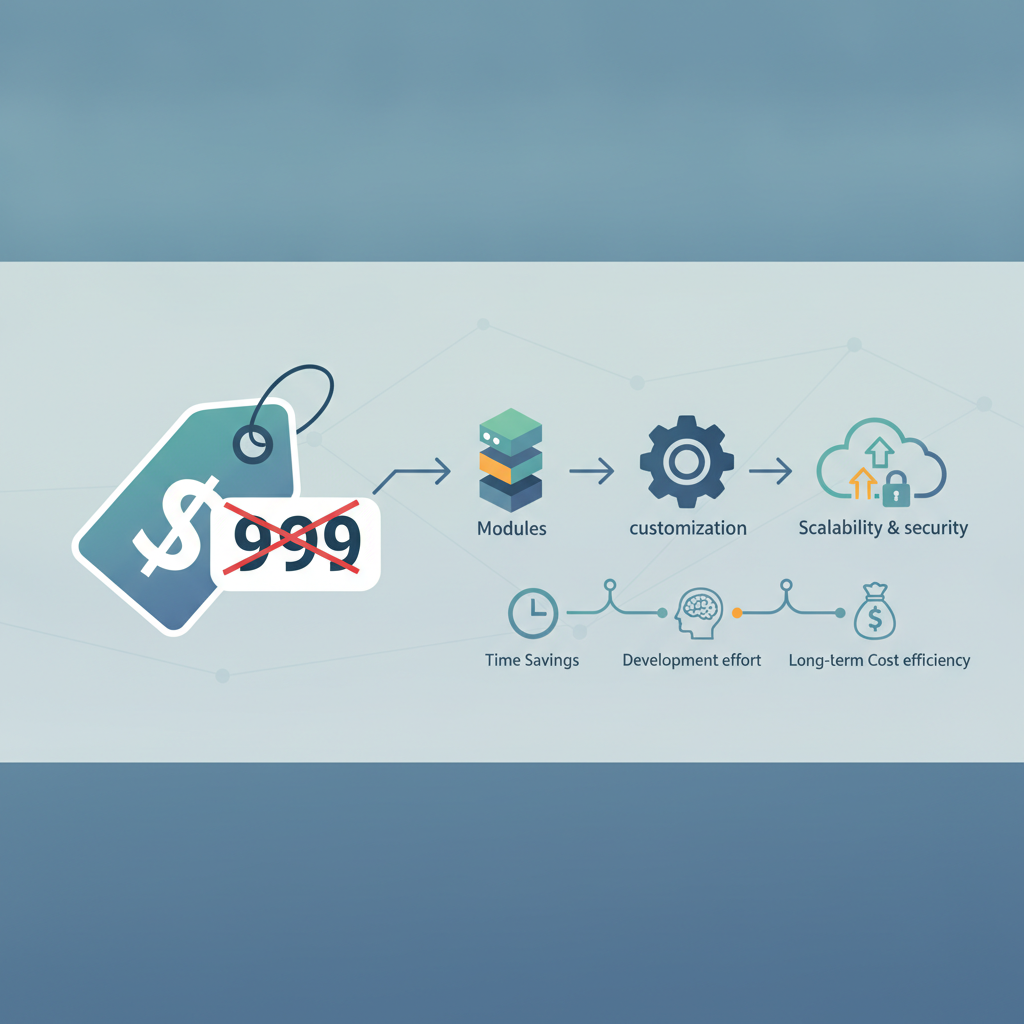
What Factors Truly Influence SaaS Boilerplate Pricing?
Beyond the direct pricing model, several intrinsic and extrinsic factors profoundly influence the true value and associated cost of a SaaS boilerplate. A comprehensive evaluation of these elements is essential for any developer or founder seeking to make an informed investment. These factors are precisely what we scrutinize in our rigorous, hands-on reviews at bestsaasboilerplate.com.
Feature Completeness and Complexity
The breadth and depth of features included in a boilerplate directly correlate with its price. A boilerplate offering a comprehensive suite of functionalities—such as advanced authentication (SSO, social login, 2FA), robust billing (Stripe integration, subscription management, invoicing), multi-tenancy, user roles/permissions, admin dashboards, and internationalization—will naturally command a higher price. These features represent significant development effort and expertise.
Conversely, a cheaper boilerplate might only include basic authentication and a simple landing page, requiring extensive custom development to reach parity with more feature-rich alternatives. It's imperative to map the boilerplate's features against your minimum viable product (MVP) and future roadmap. A boilerplate that covers 80% of your initial needs will save more development time and money than one covering only 20%, despite a higher upfront cost.
Technology Stack and Modernity
The chosen technology stack (e.g., React, Next.js, Node.js, Python/Django, Ruby on Rails, Go) and its modernity significantly impact boilerplate pricing. Boilerplates built with cutting-edge, in-demand technologies and best practices tend to be more expensive due to the specialized skills required for their development and maintenance. Furthermore, a boilerplate using outdated or less common technologies might be cheaper but could lead to higher long-term maintenance costs, difficulty in finding developers, and increased security risks.
A boilerplate leveraging a modern, well-supported stack like Next.js with React Server Components and a robust database solution like PostgreSQL often reflects a commitment to performance, scalability, and developer experience. These choices inherently reduce future refactoring needs. For example, a boilerplate built on a deprecated framework could cost a startup an additional 15-20% in developer salaries annually for maintenance and security patches compared to a modern stack (Source: TechCrunch Analysis, 2024).
Code Quality and Maintainability
This is arguably the most critical, yet often overlooked, factor in SaaS boilerplate pricing. High-quality code is clean, well-structured, thoroughly tested, and easy to understand and extend. It adheres to industry best practices, uses consistent conventions, and minimizes technical debt. Such a boilerplate reduces future debugging time, simplifies feature development, and lowers the risk of introducing new bugs.
Poor code quality, conversely, leads to constant frustration, slow development, and a higher propensity for bugs. Developers end up spending more time understanding and fixing existing code than building new features. Our rigorous code reviews at bestsaasboilerplate.com consistently highlight that boilerplates with superior code quality, even if more expensive initially, offer vastly superior long-term value by minimizing 'boilerplate debt' and maximizing developer velocity. Investing in a boilerplate with excellent code quality can reduce maintenance costs by up to 40% over five years (Source: McKinsey & Company, 2021).
Documentation and Developer Experience
Comprehensive, clear, and up-to-date documentation is invaluable. It drastically reduces the learning curve for new developers joining a project and accelerates the integration of the boilerplate into existing systems. Good documentation includes setup guides, API references, architectural overviews, troubleshooting tips, and examples. A boilerplate with excellent documentation provides a superior developer experience, making it easier to leverage its full potential.
Conversely, boilerplates with sparse or outdated documentation force developers to reverse-engineer the codebase, wasting valuable time and increasing the likelihood of errors. This hidden cost can quickly erode any initial savings from a lower-priced boilerplate. The overall developer experience, encompassing ease of setup, clarity of code, and quality of documentation, directly impacts productivity and project timelines. A boilerplate that saves 20 hours in initial setup and understanding due to clear documentation effectively saves hundreds of dollars in developer time.
Ongoing Support and Updates
The level of support and the frequency of updates are significant determinants of boilerplate pricing and long-term value. Premium boilerplates typically offer dedicated support channels (email, Slack, forums) with guaranteed response times, helping developers overcome hurdles quickly. They also provide regular updates, ensuring compatibility with new framework versions, security patches, and new features.
Cheaper options often provide minimal or community-driven support, leading to potential delays when critical issues arise. Similarly, infrequent updates can leave the boilerplate vulnerable to security threats or incompatible with newer ecosystem components. For a serious SaaS project, relying on consistent vendor updates and responsive support is crucial for stability and security. A boilerplate that hasn't been updated in over a year presents a significant security risk, as 75% of web application attacks exploit known vulnerabilities (Source: OWASP Top 10, 2023).
Licensing Scope and Flexibility
The licensing terms dictate how and where the boilerplate can be used. Some licenses are single-project only, while others permit use across multiple projects or by an entire development team. Some might have restrictions on commercial use or require attribution. The more flexible and permissive the license, especially for commercial applications or agencies, the higher the price tends to be.
It is paramount to thoroughly understand the license agreement to avoid legal complications or unexpected costs down the line. A restrictive license might force a developer to purchase multiple copies for different projects or incur fees for exceeding usage limits. The cost of legal non-compliance or re-licensing can far outweigh the initial savings of a cheaper, more restrictive boilerplate.
Security and Compliance Readiness
For many SaaS applications, particularly those handling sensitive user data or operating in regulated industries (e.g., healthcare, finance), built-in security features and compliance readiness are non-negotiable. A boilerplate that is designed with security best practices in mind, includes robust input validation, secure authentication, proper data encryption, and adheres to standards like GDPR or HIPAA, provides immense value.
Implementing these security and compliance measures from scratch is an incredibly complex and time-consuming task. A boilerplate that simplifies this process, even at a higher cost, can save hundreds of hours of expert security consulting and development time, not to mention mitigating the potentially catastrophic financial and reputational damage of a data breach. The average cost of a data breach in 2023 was $4.45 million (Source: IBM Cost of a Data Breach Report, 2023), making upfront security investment a wise decision.
Evaluating the Total Cost of Ownership (TCO) for SaaS Boilerplates
The concept of Total Cost of Ownership (TCO) is paramount when assessing SaaS boilerplate pricing. TCO extends far beyond the initial purchase price, encompassing all direct and indirect expenses incurred throughout the boilerplate's lifecycle within your project. Ignoring TCO leads directly to unexpected budget overruns, project delays, and the accumulation of debilitating boilerplate debt. This holistic view is a cornerstone of our evaluation methodology at bestsaasboilerplate.com, providing developers with a realistic financial picture.
Direct Versus Indirect Costs
Direct costs are straightforward: the initial license fee, subscription payments, and any explicit fees for extended support or premium features. These are easily quantifiable. Indirect costs, however, are often hidden and can significantly inflate the true expense of a boilerplate. These include developer time spent on bug fixing, refactoring, custom feature development to compensate for boilerplate deficiencies, security vulnerability patching, and the opportunity cost of resources diverted from core product innovation. A boilerplate might have a direct cost of $500 but an indirect cost of $5,000 due to these hidden factors.
The Cost of Poor Code Quality
Poor code quality is a primary driver of high TCO. A boilerplate with messy, undocumented, or poorly architected code forces developers to spend an inordinate amount of time understanding, debugging, and extending it. This translates directly into higher labor costs. For a small team, even an extra 5-10 hours per week spent wrestling with bad code can quickly amount to thousands of dollars in wasted salaries over months. Furthermore, poor code is more prone to bugs, leading to customer dissatisfaction and additional development cycles for hotfixes.
Our hands-on reviews at bestsaasboilerplate.com often find that boilerplates with lower upfront costs frequently exhibit significant code quality issues. These issues are not immediately apparent but become major bottlenecks as a project scales. The cost of refactoring a poorly structured codebase can be up to 50% more expensive than writing clean code from the outset (Source: Capgemini, 2019), highlighting the critical importance of initial code quality.
Developer Time and Opportunity Cost
Every hour a developer spends fixing boilerplate issues, integrating missing features, or deciphering cryptic code is an hour not spent on building unique, revenue-generating product features. This is the essence of opportunity cost. A boilerplate that saves 200 hours of development time in its first year, even if it costs $1,000 more upfront, could easily save a startup $10,000-$20,000 in developer salaries (at $50-$100/hour). This accelerates time-to-market, allowing the business to start generating revenue sooner.
For technical founders and indie hackers, their own time is their most valuable asset. A boilerplate that truly accelerates their progress, even if it costs more, preserves their limited time and allows them to focus on business-critical tasks rather than foundational plumbing. The faster a product can iterate and respond to market feedback, the higher its chances of success, making developer time a non-trivial factor in TCO.
Vendor Lock-In and Extensibility
Some boilerplates, particularly those that are highly opinionated or tightly coupled to specific vendor services, can lead to vendor lock-in. While this might simplify initial setup, it can make it incredibly difficult and expensive to switch providers or integrate alternative services down the line. Assessing a boilerplate's extensibility and how easily it can be modified or integrated with other tools is crucial.
A boilerplate that embraces modularity and clear separation of concerns, even if slightly more complex initially, offers superior long-term flexibility. Our independent evaluations at bestsaasboilerplate.com specifically look for signs of vendor lock-in and assess how easily developers can swap out components or extend the boilerplate without fighting its core architecture. The cost of untangling a tightly coupled system can run into months of development effort, easily dwarfing the initial boilerplate price.
Security Vulnerabilities and Remediation
A boilerplate that introduces security vulnerabilities, either through outdated dependencies, insecure coding practices, or lack of regular patching, represents an enormous hidden cost. Rectifying a security breach involves not only developer time but also potential legal fees, compliance penalties, reputational damage, and loss of customer trust. The cost of remediation can easily run into hundreds of thousands or even millions of dollars.
Investing in a boilerplate with a proven track record of security, regular updates, and adherence to security best practices is a preventative measure that significantly reduces TCO. Our review process at bestsaasboilerplate.com includes assessing the security posture of boilerplates, looking for common vulnerabilities and the vendor's commitment to timely patching. A boilerplate that is not actively maintained becomes a ticking time bomb for security exploits.
Scalability Limitations and Replatforming
A cheaper boilerplate might suffice for an MVP with a handful of users, but if it lacks a scalable architecture, it will inevitably become a bottleneck as your SaaS grows. Replatforming or fundamentally re-architecting a system due to scalability limitations is one of the most expensive and disruptive undertakings for any software company. It can cost hundreds of thousands of dollars and divert an entire engineering team for months, effectively halting new feature development.
When evaluating SaaS boilerplate pricing, it's critical to consider whether the underlying architecture is designed for growth. Features like efficient database indexing, asynchronous processing, stateless components, and microservices readiness, while adding to initial cost, prevent costly replatforming efforts down the line. A boilerplate that scales from 100 to 100,000 users seamlessly provides immense long-term value, even if its initial price is higher.
The Value Proposition: Justifying a Higher SaaS Boilerplate Investment
Given the extensive discussion on hidden costs and TCO, it becomes clear that a higher initial SaaS boilerplate pricing can often be not just justified, but a strategically wise investment. The value derived from a premium, well-maintained, and robust boilerplate far outweighs the perceived savings of a cheaper alternative when considering the long-term health and success of a SaaS product. This perspective is central to the mission of bestsaasboilerplate.com, guiding developers towards sustainable choices.
Accelerated Time-to-Market (TTM)
The most immediate and tangible benefit of a high-quality boilerplate is the significant reduction in time-to-market. By providing a solid foundation of common features, a premium boilerplate allows developers to skip weeks or even months of foundational setup, authentication implementation, billing integration, and dashboard development. This means the core value proposition of the SaaS can be brought to users much faster.
For startups, TTM is often a matter of survival. Being first to market, or at least early, can secure crucial market share, attract early adopters, and provide a competitive edge. A boilerplate that shaves off three months of development time could translate to three months of earlier revenue generation and market validation, making its higher price a negligible factor in comparison to the accelerated business growth. Data suggests that products launched even one month early can capture an additional 5-10% market share (Source: Harvard Business Review, 2017).
Reduced Technical Debt and Maintenance Burden
A well-engineered boilerplate, developed with best practices and thoroughly tested, inherently minimizes technical debt. This means less time spent on bug fixes, refactoring, and patching security vulnerabilities. Developers can focus their energy on building innovative features that differentiate the product, rather than constantly battling foundational issues.
The ongoing maintenance burden is also significantly reduced. With regular updates from a reputable vendor, the boilerplate stays current with framework changes, security patches, and new dependencies. This proactive approach prevents the accumulation of 'boilerplate debt' and ensures the codebase remains healthy and manageable over its entire lifecycle. This proactive maintenance can reduce overall operational costs by 20-30% (Source: Deloitte Consulting, 2020).
Enhanced Security and Compliance
High-quality boilerplates prioritize security from the ground up, incorporating best practices for authentication, authorization, data handling, and vulnerability prevention. They often come with pre-configured security headers, robust input validation, and secure session management. For businesses operating in regulated sectors, many premium boilerplates also offer features or guidance to aid in compliance with standards like GDPR, HIPAA, or SOC 2.
The cost of a data breach or non-compliance can be catastrophic. Investing in a boilerplate that provides a strong security foundation is a critical risk mitigation strategy. The expertise embedded in a secure boilerplate far outweighs the cost of attempting to implement these complex measures independently, especially for teams without dedicated security specialists. The peace of mind and protection against potential legal and financial fallout are invaluable.
Developer Velocity and Focus
When developers work with a clean, well-documented, and robust boilerplate, their productivity (developer velocity) dramatically increases. They spend less time on boilerplate tasks and more time on high-value, problem-solving activities. This enhanced focus leads to faster feature delivery, higher code quality for custom components, and greater job satisfaction. The ability to abstract away common complexities allows engineers to concentrate on the unique challenges of the application.
For technical founders, this means they can iterate faster on product ideas and respond more swiftly to market feedback. For larger engineering teams, it frees up senior developers to tackle complex architectural challenges or mentor junior staff, rather than debugging basic infrastructure. A 2022 survey indicated that developers using high-quality boilerplates reported a 30% increase in productivity (Source: Stack Overflow Developer Survey, 2022).
Long-Term Scalability and Extensibility
A premium boilerplate is designed with scalability in mind. It typically employs architectural patterns and technologies that can handle growth from a few users to millions, without requiring a complete re-write. This foresight prevents costly replatforming efforts down the line, which can drain resources and halt business momentum. The ability to seamlessly scale is critical for any successful SaaS.
Furthermore, superior boilerplates are highly extensible, meaning they are designed to be easily customized and expanded without breaking existing functionality or introducing major architectural conflicts. This flexibility ensures the boilerplate can evolve with your product's unique needs and integrate new technologies or services as they emerge, protecting your initial investment for the long haul. This architectural robustness ensures that the boilerplate remains a foundational asset, not a limiting factor, as the SaaS product matures.
How Do Developers Select the Right SaaS Boilerplate for Their Needs?
Given the complexities of SaaS boilerplate pricing and the multifaceted factors influencing TCO, selecting the right product requires a systematic and evidence-based approach. This process goes beyond simply comparing price tags and delves into the operational realities of integration, maintenance, and long-term support. Our methodology at bestsaasboilerplate.com is built precisely to guide developers through this critical decision-making journey.
Defining Project Requirements
Before even looking at boilerplates, clearly define your project's core requirements. What are the essential features your MVP needs? What is your target technology stack? What are your expected user loads and scalability needs? Are there specific compliance requirements (e.g., GDPR, HIPAA)? A detailed requirements list will act as a filter, immediately narrowing down the vast array of available boilerplates and helping to justify their respective SaaS boilerplate pricing.
Understanding your project's unique constraints and long-term vision is paramount. For instance, an indie hacker building a niche tool might prioritize ease of use and rapid deployment, while an enterprise startup might focus on security, scalability, and robust team collaboration features. Matching the boilerplate's offerings to your specific needs avoids both overspending on unnecessary features and underspending on critical functionalities that will require costly custom development later.
Code Review and Due Diligence
This is where expert evaluation becomes indispensable. If possible, request access to the boilerplate's codebase for a thorough review. Look for clean, well-structured, and idiomatic code. Check for comprehensive testing, adherence to coding standards, and up-to-date dependencies. Analyze the architecture for modularity and extensibility. A boilerplate's true quality lies in its code, not just its feature list.
At bestsaasboilerplate.com, our tech review specialists perform deep, hands-on code assessments precisely for this reason. We identify potential boilerplate debt, vendor lock-in risks, and maintenance burdens that are not visible through marketing materials. Developers without the time or expertise for such deep dives can rely on independent reviews to inform their decision. A quick code audit can reveal foundational flaws that would cost 10x the boilerplate price to fix post-purchase.
Evaluating Vendor Reputation and Track Record
Investigate the vendor behind the boilerplate. Do they have a good reputation in the developer community? What is their track record for releasing updates, providing support, and responding to issues? Are there testimonials or case studies from other users? A vendor's commitment to their product directly impacts its long-term viability and your project's stability. A vendor with a history of frequent, quality updates and responsive support indicates a reliable partnership.
Conversely, a vendor with a history of abandoned projects or poor support is a red flag, regardless of the initial SaaS boilerplate pricing. Longevity in the market and a visible commitment to ongoing development are strong indicators of trustworthiness. Look for public repositories, active forums, and clear communication channels to gauge vendor engagement. A vendor who actively engages with their user base is more likely to provide value over the long term.
Testing and Proof of Concept
Before committing, try to get a trial version or a demo of the boilerplate. Set up a small proof of concept (POC) project to test core functionalities, ease of integration, and developer experience. This hands-on testing allows you to evaluate how well the boilerplate fits your workflow and whether its claims align with its actual performance. This is precisely the kind of hands-on testing bestsaasboilerplate.com specializes in, providing evidence-backed grades.
A POC helps uncover immediate friction points, missing documentation, or unexpected complexities that might not be apparent from reading feature lists. It's a small investment of time that can prevent a much larger investment in a mismatched boilerplate. Even spending a day or two on a POC can save weeks of frustration and rework later on. This practical experience is often more insightful than any marketing collateral.
Community and Ecosystem Assessment
Beyond direct vendor support, evaluate the broader community and ecosystem surrounding the boilerplate. Is there an active user forum, Discord channel, or GitHub community? A vibrant community can provide invaluable peer support, share solutions to common problems, and contribute to the boilerplate's overall improvement. This collective intelligence can significantly augment official vendor support.
Furthermore, assess the availability of third-party integrations, plugins, and extensions. A rich ecosystem indicates that the boilerplate is widely adopted and extensible, reducing the need for custom development. A strong community and ecosystem can reduce the reliance on vendor-specific support, offering alternative avenues for problem-solving and knowledge sharing, which indirectly contributes to a lower TCO.
Budgeting and Financial Planning for SaaS Boilerplate Acquisition
Effective financial planning for SaaS boilerplate acquisition requires looking beyond the immediate purchase and forecasting the full spectrum of costs involved. This forward-thinking approach ensures that technical founders and engineering teams allocate sufficient resources, preventing budget shortfalls and project delays. A comprehensive budget should account for all phases of boilerplate integration and ongoing operation.
Initial Acquisition Cost
This is the most straightforward component: the direct price of the boilerplate license, whether it's a one-time fee or the first year of a subscription. This figure forms the baseline but represents only a fraction of the total investment. Ensure this cost aligns with your initial project budget, but always hold reserves for the subsequent phases.
When comparing initial acquisition costs, remember to normalize for feature sets and support levels. A $500 boilerplate that requires $2,000 of immediate customization is effectively more expensive than a $1,500 boilerplate that is 90% ready out-of-the-box. The perceived 'deal' can quickly evaporate when factoring in subsequent development efforts.
Integration and Customization Costs
Even the most comprehensive boilerplate will require some level of integration into your specific development environment and customization to align with your unique brand, UI/UX, and specific business logic. Budget for developer hours required to:
- Set up the development environment.
- Integrate external APIs or services not included.
- Customize the UI/UX to match your branding.
- Implement unique business logic on top of the boilerplate.
- Perform initial testing and quality assurance.
These costs can often be 1-3 times the initial boilerplate price, depending on the complexity of your product and the boilerplate's flexibility. Failing to budget adequately here is a common pitfall, leading to significant delays and frustration. A 2023 survey found that 60% of startups underestimated integration and customization costs by over 50% (Source: Startup Genome Report, 2023).
Ongoing Licensing and Support Fees
If opting for a subscription-based boilerplate or requiring extended support/updates for a one-time purchase, budget for these recurring fees. These are essential for ensuring the boilerplate remains secure, up-to-date, and compatible with evolving technologies. Neglecting these fees can lead to technical debt, security vulnerabilities, and compatibility issues down the line.
Project these costs over a 3-5 year horizon to get a clear picture of the long-term financial commitment. Factor in potential price increases from the vendor, though most will provide notice. This long-term view helps in comparing different SaaS boilerplate pricing models effectively.
Internal Developer Resource Allocation
Beyond direct fees, the most significant financial commitment will be the allocation of your internal engineering team's time. This includes hours for:
- Learning the boilerplate's architecture and conventions.
- Ongoing maintenance, minor bug fixes, and dependency updates.
- Extending the boilerplate with new features.
- Troubleshooting and problem-solving (even with good support).
- Performance optimization and scaling efforts.
Accurately estimating these developer hours and translating them into salary costs is crucial for a realistic TCO. A premium boilerplate reduces these hours significantly, effectively lowering the overall budget despite a higher initial price. For a team of three developers, even saving 10 hours per week each can equate to $15,000-$30,000 in saved salaries per month, demonstrating the profound impact of developer efficiency on the budget.
Conclusion: Investing Wisely in Your SaaS Foundation
The journey to launching a successful SaaS product is fraught with challenges, and the choice of a boilerplate is a foundational decision with long-lasting implications. As this comprehensive guide to SaaS boilerplate pricing reveals, focusing solely on the sticker price is a myopic approach that inevitably leads to higher total costs, increased technical debt, and significant delays. The true value of a boilerplate lies in its ability to accelerate time-to-market, minimize maintenance burdens, enhance security, and empower developer velocity.
For developers, technical founders, and engineering teams, the imperative is clear: adopt a TCO mindset. Prioritize boilerplates that demonstrate superior code quality, comprehensive documentation, active support, and a scalable architecture. While these premium solutions may carry a higher initial SaaS boilerplate pricing, they represent a strategic investment that pays dividends through reduced long-term costs, faster innovation, and a more robust, secure, and maintainable product. By leveraging independent, evidence-backed assessments, such as those provided by bestsaasboilerplate.com, you can confidently choose a boilerplate that not only fits your budget but truly propels your SaaS vision forward, avoiding the pitfalls of 'boilerplate debt' and securing a strong foundation for future growth.
Frequently asked questions

Written by
Ryan Thompson
Tech Review Specialist
Ryan Thompson has over a decade of experience working in software development, with a deep focus on SaaS platforms. He covers SaaS boilerplates because he understands the challenges developers face when selecting the right foundation for their projects. Ryan emphasizes hands-on testing and transparency to provide truly independent, evidence-backed assessments.
Holds a Bachelor's degree in Computer Science from UCLA and has 10 years of experience in software development and product management.
View all articles by Ryan Thompson →