
Clean Code SaaS Templates: The Unseen Costs of Neglect
Quick answer
Clean code in SaaS templates is a strategic investment, not a luxury. This guide exposes the hidden costs of poor code quality and offers a framework for informed selection.
Key takeaways
- Clean code in SaaS templates is not merely aesthetic; it's a quantifiable asset that directly reduces long-term TCO and accelerates development cycles.
- Many boilerplates marketed as 'clean' often harbor significant technical debt, leading to hidden costs and vendor lock-in that hinder future growth.
- A truly clean code SaaS template is characterized by architectural integrity, maintainability, testability, robust security, and scalability.
- Independent evaluation platforms like BestSaaSBoilerplate.com are essential for verifying genuine code quality beyond marketing claims, using hands-on testing and transparent grading.
- Investing in a clean code foundation from the outset future-proofs a SaaS product, enhancing its adaptability, investor appeal, and team efficiency.

The Deceptive Promise: Why "Clean Code" in SaaS Boilerplates is Often a Myth
The BestSaaSBoilerplate.com Methodology: Unmasking Code Quality
How Do Clean Code SaaS Templates Directly Impact Your Bottom Line?
Choosing the Right Clean Code SaaS Template: A Strategic Framework
Common Pitfalls and How to Avoid Them When Selecting a Boilerplate
Future-Proofing Your SaaS: The Long-Term Advantages of Clean Code
Clean Code SaaS Templates: The Unseen Costs of Neglect
Ryan ThompsonTech Review SpecialistAugust 19, 2026
What are clean code SaaS templates and why are they critical for developers?
Clean code SaaS templates are pre-built software foundations meticulously designed with high-quality, maintainable, and readable code. They are critical for developers and technical founders because they significantly reduce long-term technical debt, accelerate feature development, minimize debugging efforts, and improve scalability, directly impacting a SaaS product's total cost of ownership and market viability.
Clean code SaaS templates are pre-built software foundations meticulously designed with high-quality, maintainable, and readable code. They are critical for developers and technical founders because they significantly reduce long-term technical debt, accelerate feature development, minimize debugging efforts, and improve scalability, directly impacting a SaaS product's total cost of ownership and market viability. As Ryan Thompson, a Tech Review Specialist with over a decade of experience in SaaS development, understands, selecting the right foundation is paramount. His hands-on testing and transparent approach at BestSaaSBoilerplate.com reveals that while many boilerplates promise 'clean code,' the reality often falls short, leading to unforeseen challenges and expenses down the line. This guide delves into what truly constitutes clean code, how to identify it, and why investing in it from the outset is a strategic imperative for any aspiring SaaS.
The Deceptive Promise: Why "Clean Code" in SaaS Boilerplates is Often a Myth
The term "clean code" is frequently thrown around in the boilerplate market, often without genuine substance. Many providers leverage this buzzword to attract developers seeking a solid foundation, yet their offerings frequently fall short under rigorous examination. This discrepancy between marketing claims and actual code quality is a critical challenge for technical founders and engineering teams. The allure of rapid deployment can overshadow the need for robust, maintainable code, leading to significant, unforeseen costs later in the development lifecycle. It's not enough for code to simply "work"; for a SaaS application, it must be engineered for longevity, scalability, and ease of evolution. The initial time savings from a seemingly fast boilerplate can be quickly eroded by accumulated technical debt.
Ryan Thompson's work at BestSaaSBoilerplate.com highlights this very issue. Through hands-on testing and deep code reviews, many boilerplates are found to have superficial cleanliness, masking deeper architectural flaws. This makes it challenging for buyers to discern true quality, especially when under pressure to launch quickly. A critical review process is not just about finding bugs; it's about evaluating the fundamental design decisions that dictate a product's future.
Surface-Level vs. Deep Structural Cleanliness
Many boilerplates present code that appears clean at a glance: well-formatted, commented, and adhering to basic style guides. However, true clean code extends far beyond superficial aesthetics. It involves deep structural integrity, logical separation of concerns, adherence to design patterns (like SOLID principles), and efficient data flow. A codebase might look tidy but conceal complex, intertwined dependencies that make future modifications a nightmare. This is the difference between an aesthetically pleasing façade and a structurally sound building.
For instance, a template might use consistent naming conventions but have business logic scattered across multiple layers or deeply nested within UI components. This creates a brittle system where a simple feature change could ripple unexpectedly through the entire application. Identifying this requires more than a quick scan; it demands a thorough architectural review, akin to what experienced architects perform on blueprints before construction begins. The hidden complexity often manifests months into development, when critical refactoring becomes necessary, costing significant time and resources.
The Hidden Costs of "Fast" Development
The promise of "launching in days" or "rapid prototyping" is a powerful marketing tool for boilerplate vendors. While speed is undeniably valuable, especially for indie hackers and startups, it often comes at a hidden cost: accumulated technical debt. This debt, much like financial debt, incurs interest in the form of increased maintenance efforts, slower feature development, and higher defect rates. It's tempting to opt for the fastest path, but this often means inheriting a codebase that prioritizes immediate functionality over long-term sustainability.
Research indicates that organizations spend up to 42% of their development time on technical debt (Source: Stripe, 2023). This figure can be significantly higher for projects built on foundations with poor initial code quality. These hidden costs include longer debugging sessions, difficulty in onboarding new team members who struggle to understand convoluted logic, and the eventual need for costly refactoring or even a complete rewrite. What seems like a cost-saving measure upfront can turn into a substantial financial drain, jeopardizing the very existence of a startup.
Vendor Lock-in Disguised as Convenience
Another subtle pitfall is vendor lock-in, which can be inadvertently built into boilerplates that claim to offer convenience. This occurs when a template heavily relies on proprietary frameworks, obscure libraries, or highly customized architectural patterns that are difficult to migrate away from. While convenient initially, this tight coupling makes it challenging to switch vendors, upgrade core components, or even integrate third-party services without significant effort. The developer finds themselves tied to the boilerplate's original design, regardless of evolving project needs or emerging technologies.
For example, a boilerplate might provide a custom authentication system that, while functional, is tightly integrated with its specific database schema and UI components. Decoupling this to use a standard OAuth provider or a different database becomes an arduous task, essentially negating the benefits of modularity. This lack of architectural flexibility stifles innovation and forces developers to work within predefined constraints, limiting their options for future growth and optimization. It traps developers within the confines of the boilerplate's initial vision, regardless of their own strategic direction.
What Constitutes Truly Clean Code in a SaaS Template?
Understanding what genuinely defines clean code is paramount for making an informed decision about SaaS templates. It's not a subjective ideal but a set of measurable characteristics that contribute to a codebase's health and longevity. These attributes directly influence a project's future development trajectory, its ability to scale, and its resilience against bugs and security vulnerabilities. A boilerplate embodying these principles offers a robust foundation, allowing developers to focus on unique business logic rather than wrestling with foundational issues.
As advocated by software engineering luminaries like Robert C. Martin in his seminal work on clean code, the principles revolve around clarity, simplicity, and efficiency. A boilerplate should exemplify these from the ground up, not just in isolated modules but across its entire architecture. This holistic approach ensures that every component contributes to a coherent and manageable system, reducing friction for new developers and simplifying future enhancements.
Architectural Integrity and Modularity
At its core, clean code in a SaaS template is defined by strong architectural integrity and modularity. This means the system is designed with clear boundaries between different components and layers, such as presentation, business logic, and data access. Each module should have a single, well-defined responsibility, adhering to the Single Responsibility Principle (SRP). This separation makes the codebase easier to understand, test, and modify without affecting unrelated parts of the system. Modular design promotes reusability and reduces the cognitive load on developers.
A truly modular boilerplate allows developers to swap out components (e.g., a different database, an alternative payment gateway) with minimal effort, thanks to well-defined interfaces and dependency injection. This flexibility is crucial for SaaS products that often need to adapt to changing market demands or integrate new third-party services. Without it, even minor changes can become major refactoring projects, leading to delays and increased development costs. The structure should guide developers towards good practices, not allow for tangled spaghetti code.
Readability and Maintainability
Perhaps the most immediate benefit of clean code is its readability and subsequent maintainability. Code is read far more often than it is written, so clarity is king. This includes consistent naming conventions, sensible comments (explaining "why," not "what"), appropriate abstraction levels, and adherence to established style guides. A developer should be able to quickly grasp the purpose and functionality of a piece of code, even if they didn't write it themselves. This drastically reduces the time spent on understanding existing logic before implementing new features or fixing bugs.
High maintainability means that modifying the codebase is straightforward and introduces minimal risk. It implies that changes in one area do not inadvertently break functionality in another. Boilerplates with clean, readable code enable faster bug fixes, easier updates, and more efficient feature additions, directly impacting development velocity. A developer should not have to be an archaeologist to understand the codebase, digging through layers of obscure logic and undocumented decisions.
Testability and Robustness
A hallmark of clean code is its inherent testability. Well-structured, modular code allows for easy creation of unit, integration, and end-to-end tests. Components with clear responsibilities and minimal side effects are simpler to isolate and test independently, ensuring their correctness. This leads to a more robust application with fewer defects in production. Boilerplates that include comprehensive testing frameworks and examples demonstrate a commitment to quality and provide a solid starting point for a test-driven development (TDD) approach.
Robustness also implies error handling that is graceful and informative, preventing cascading failures and providing clear diagnostics when issues arise. Exceptions should be handled appropriately, and edge cases considered. A template that comes with a high test coverage (e.g., 80% or more for critical paths) significantly reduces the risk of future regressions and provides confidence in deploying new features. This commitment to quality assurance is a direct reflection of clean code principles in practice.
Performance and Scalability
While often overlooked in initial boilerplate evaluations, performance and scalability are critical for any SaaS product aiming for growth. Clean code contributes to these by avoiding inefficient algorithms, unnecessary database queries, and redundant computations. Optimized code runs faster and consumes fewer resources, leading to lower hosting costs and a better user experience. A well-designed boilerplate anticipates future load and provides patterns for efficient data handling, caching, and concurrent processing.
Scalability means the application can handle increasing numbers of users and data without significant re-architecture. This is achieved through stateless design, horizontal scaling patterns, and efficient resource management. A boilerplate that leverages modern frameworks and best practices for performance (e.g., optimized API endpoints, efficient ORM usage) sets a SaaS product up for success. Ignoring these aspects upfront can lead to expensive performance bottlenecks and re-engineering efforts as the user base expands, often at critical growth stages.
Security Best Practices
Finally, security best practices are an indispensable component of clean code, especially for SaaS applications handling sensitive user data. A clean codebase integrates security from the ground up, not as an afterthought. This includes proper input validation, output encoding, secure authentication and authorization mechanisms, protection against common vulnerabilities like SQL injection and XSS, and secure configuration management. Adherence to standards like those outlined by OWASP is crucial (Source: OWASP, 2024).
A boilerplate should demonstrate a clear understanding of security implications, providing secure defaults and guidance on how to maintain a secure posture. For example, it should incorporate robust password hashing, role-based access control, and secure session management. Neglecting security in the pursuit of quick development can lead to catastrophic data breaches, reputational damage, and legal liabilities. A secure foundation is non-negotiable for any SaaS business that values its users and its future.
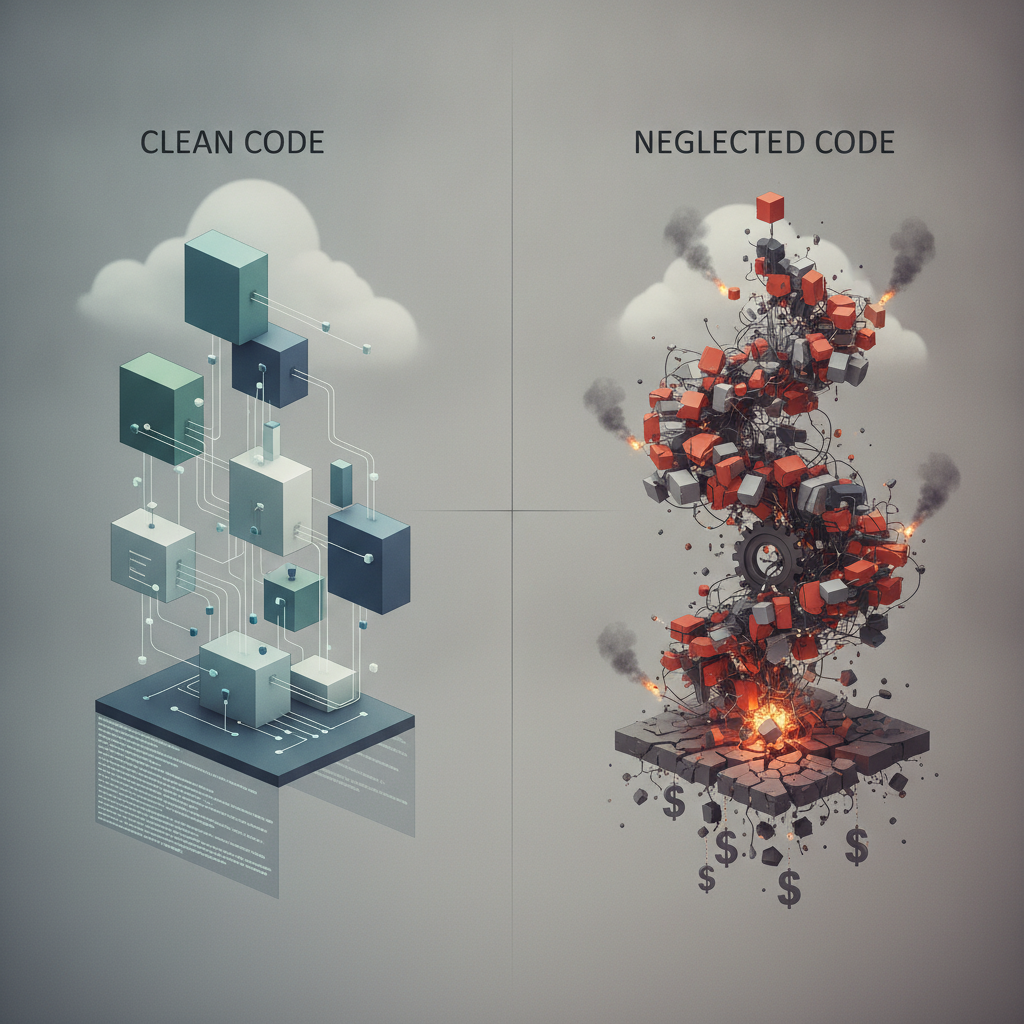
The BestSaaSBoilerplate.com Methodology: Unmasking Code Quality
Given the prevalent marketing hype surrounding "clean code," developers and technical founders need an objective, evidence-based approach to evaluate SaaS boilerplates. This is precisely the mission of BestSaaSBoilerplate.com. Our platform operates on a unique methodology rooted in independent, hands-on testing and transparent assessment, directly addressing the gap between vendor claims and actual product quality. We exist to provide clarity in a market often obscured by subjective reviews and affiliate-driven recommendations. Our commitment to unbiased evaluations ensures that our users receive truly actionable insights.
Ryan Thompson, leading our review process, emphasizes that surface-level checks are insufficient. Our approach goes deep, scrutinizing not just what a boilerplate promises, but what it truly delivers in terms of code quality, maintainability, and long-term viability. We invest in buying and thoroughly testing each product, mimicking the real-world scenarios developers face. This direct engagement allows us to uncover hidden technical debt, evaluate support responsiveness, and assess the honesty of marketing claims, providing a level of scrutiny unmatched by generic review sites.
Hands-on Testing and Code Review
Our core strength lies in our rigorous hands-on testing and deep code review process. We don't just read documentation or marketing brochures; we clone the repository, set up the development environment, build the application, and deploy it. This allows us to experience the developer onboarding process firsthand and identify any friction points. Subsequently, our experts dive into the codebase, performing a comprehensive architectural and code-level audit. This involves scrutinizing file structures, design patterns, component coupling, dependency management, and adherence to language-specific best practices.
We look for clear separation of concerns, consistent coding styles, effective error handling, and the presence of a robust testing suite. Our review process actively seeks out potential technical debt, evaluating code complexity metrics and identifying areas prone to future maintenance headaches. This detailed inspection goes beyond automated linting tools, leveraging experienced human judgment to assess the true "cleanliness" of the code. We also evaluate how well the boilerplate integrates common SaaS features like authentication, payments, and background jobs, ensuring they are implemented securely and efficiently.
Evaluating Documentation and Support
Beyond the code itself, we critically assess the quality of documentation and vendor support. Comprehensive, clear, and up-to-date documentation is vital for developer productivity and long-term maintenance. We evaluate whether the documentation covers setup, deployment, common customization scenarios, and troubleshooting. Poor documentation often indicates a lack of attention to detail or an assumption that the code is self-explanatory, which is rarely the case for complex SaaS applications.
Furthermore, we actively engage with the boilerplate's support channels, posing technical questions and evaluating response times, helpfulness, and expertise. This is crucial because even the best boilerplate will eventually require support or clarification. A responsive and knowledgeable support team can save countless hours of debugging and frustration. Our tests simulate real user issues, providing an authentic measure of the support experience, which is often a significant factor in long-term project success and developer satisfaction.
Assessing Long-Term Maintenance Potential
A SaaS boilerplate is an investment for years, not months. Therefore, our methodology places significant emphasis on assessing long-term maintenance potential. This involves evaluating the boilerplate's technology stack choices – are they current, widely supported, and likely to remain relevant? We examine the frequency of updates, the clarity of the upgrade path, and the vendor's commitment to ongoing development. A boilerplate that is stagnant or uses deprecated technologies will quickly become a liability, requiring expensive manual updates.
We also consider the boilerplate's community and ecosystem. A thriving community can provide invaluable resources, third-party integrations, and peer support, extending the boilerplate's lifespan. Our reviews project the boilerplate's adaptability to evolving industry standards and security threats, providing insights into its future-proofing capabilities. This forward-looking assessment helps developers avoid solutions that might seem convenient today but will become obsolete or unmanageable tomorrow, directly impacting the TCO.
Quantifying Technical Debt
One of the most challenging yet critical aspects of our review is attempting to quantify technical debt. While not always perfectly measurable, our experienced reviewers identify common indicators: high cyclomatic complexity, deeply nested logic, excessive global state, tight coupling between unrelated modules, and a lack of automated tests. We provide concrete examples from the codebase to illustrate these points, offering tangible evidence of potential future costs. This approach moves beyond subjective opinion to present an objective, data-driven assessment.
Our grades reflect the severity and pervasiveness of this debt, translating abstract code quality issues into practical risks for development teams. A boilerplate with significant technical debt will inevitably lead to slower development cycles, increased bug rates, and higher operational costs, even if it appears functional initially. By highlighting these issues upfront, BestSaaSBoilerplate.com empowers developers to make decisions based on a realistic understanding of a boilerplate's true cost, preventing costly surprises down the road. We believe in transparency and providing the full picture, even the uncomfortable truths about code quality.
How Do Clean Code SaaS Templates Directly Impact Your Bottom Line?
The investment in clean code SaaS templates is often perceived as an upfront cost, a luxury, or an academic pursuit. However, for technical founders and engineering teams, it is a strategic decision with profound and measurable impacts on a company's financial performance and operational efficiency. The benefits extend far beyond developer happiness, directly influencing key metrics such as time-to-market, operational expenses, and even employee retention. Understanding these bottom-line impacts transforms clean code from a "nice-to-have" into a "must-have."
Every hour saved in debugging, every developer onboarded faster, and every feature shipped more reliably contributes directly to profitability and competitive advantage. A technically sound foundation minimizes wasted resources and maximizes productivity, allowing the business to allocate capital more effectively towards growth and innovation rather than remediation. This direct correlation between code quality and financial health is a central tenet of our independent assessments at BestSaaSBoilerplate.com.
Reducing Developer Onboarding Time
One of the most immediate and quantifiable benefits of clean code is a significant reduction in developer onboarding time. When a new engineer joins a team, they must first understand the existing codebase before they can contribute effectively. A cluttered, inconsistent, or poorly documented codebase can turn this process into a weeks-long struggle. In contrast, a clean, well-structured, and consistently styled codebase allows new hires to become productive much faster, sometimes in a matter of days. This is particularly crucial for startups with limited resources and aggressive hiring goals.
Consider the cost of a developer's salary for the initial unproductive weeks. If a boilerplate reduces onboarding time by two weeks, that translates into substantial savings per hire. Moreover, it boosts team morale and reduces frustration for both the new hire and their mentors. A boilerplate that provides clear examples, well-defined architecture, and excellent documentation acts as an accelerated learning platform, making the team more agile and responsive to growth. Industry data suggests that effective onboarding can reduce employee turnover by 82% (Source: Glassdoor, 2022), further contributing to cost savings.
Accelerating Feature Development Cycles
The speed at which a SaaS product can iterate and deploy new features is a critical determinant of its market success. Clean code SaaS templates inherently accelerate feature development cycles. With a clear, modular architecture, developers can implement new functionalities without fear of introducing regressions or getting entangled in complex dependencies. Each feature can be developed, tested, and deployed with greater confidence and speed, allowing the business to respond quickly to market demands and competitor actions.
Conversely, a codebase riddled with technical debt turns every new feature into a battle against existing complexities. Developers spend more time deciphering old code, refactoring to accommodate new logic, and fixing unintended side effects. This slows down the entire development pipeline, delaying product launches and hindering competitive advantage. A clean foundation enables predictable and efficient development, directly contributing to a faster time-to-market and increased revenue generation. A 2023 study found that high-performing engineering teams release code 208 times more frequently (Source: DORA, 2023).
Minimizing Bug Fix and Debugging Efforts
Bugs are inevitable in any software, but the cost associated with finding and fixing them varies dramatically with code quality. Clean code significantly minimizes bug fix and debugging efforts. A well-structured codebase with clear logic, proper error handling, and comprehensive tests makes it easier to pinpoint the source of a problem. Testable units mean that when a bug is found, it's often isolated to a specific, manageable area, rather than requiring a system-wide investigation.
The cost of a bug increases exponentially the later it is discovered in the development cycle. Bugs found in production are the most expensive, impacting user experience, reputation, and potentially revenue. A boilerplate that promotes robust testing and clear code reduces the incidence of production bugs and speeds up their resolution when they do occur. This translates into fewer resources spent on reactive maintenance and more time dedicated to proactive development, directly improving the bottom line and customer satisfaction. The average cost of a software bug can range from hundreds to millions of dollars depending on severity and impact (Source: IBM, 2021).
Enhancing System Uptime and Reliability
For a SaaS business, system uptime and reliability are paramount. Downtime directly translates to lost revenue, frustrated customers, and potential churn. Clean code, with its emphasis on testability, robust error handling, and clear architecture, contributes directly to a more stable and reliable application. Fewer bugs mean fewer production incidents, leading to higher uptime guarantees and a consistent, positive user experience. This builds trust with customers and strengthens the brand's reputation in a competitive market.
A boilerplate designed with resilience in mind, incorporating patterns for fault tolerance and graceful degradation, provides a strong defense against unforeseen issues. It ensures that even when components fail, the overall system remains operational or recovers quickly. This proactive approach to reliability, embedded in clean code principles, minimizes the financial impact of outages and safeguards customer loyalty. The cost of downtime for an average business is estimated at $5,600 per minute (Source: Gartner, 2020), emphasizing the critical nature of reliability.
Increasing Team Morale and Retention
While often considered an intangible benefit, increasing team morale and retention has direct financial implications. Developers prefer working on clean, well-organized codebases that allow them to be productive and proud of their work. Constantly battling technical debt, deciphering spaghetti code, and fixing recurring bugs leads to frustration, burnout, and ultimately, higher employee turnover. The cost of replacing a developer can be substantial, including recruitment fees, lost productivity during the hiring process, and onboarding expenses.
A clean code SaaS template fosters a positive development environment, enabling engineers to focus on innovative solutions rather than wrestling with foundational problems. This leads to higher job satisfaction, increased engagement, and improved retention rates. A stable, happy engineering team is more productive, more collaborative, and more likely to deliver high-quality features consistently. Investing in clean code is therefore an investment in your people, which directly translates to long-term business stability and success, demonstrating a commitment to their professional well-being.
Choosing the Right Clean Code SaaS Template: A Strategic Framework
Selecting a clean code SaaS template is one of the most critical early decisions for any technical founder or engineering team. It lays the groundwork for years of development, scalability, and maintenance. Approaching this decision strategically, rather than impulsively, is essential to avoid future pitfalls and maximize the return on investment. This framework provides a structured approach to evaluating boilerplates, ensuring that your choice aligns with your long-term vision and technical requirements. It moves beyond superficial feature lists to focus on the underlying code quality and architectural soundness.
As Ryan Thompson frequently highlights, the market is saturated with options, and discerning true quality requires diligence. Our framework guides you through a systematic process, emphasizing due diligence and critical assessment. It’s about asking the right questions, performing the necessary investigations, and not taking marketing claims at face value. This proactive approach ensures you build your SaaS on a foundation designed for success, not just rapid launch.
Define Your Project's Core Requirements
Before even looking at a single boilerplate, clearly define your project's core requirements. This includes your anticipated technology stack (e.g., React, Next.js, Node.js, Python, Ruby on Rails), database preferences (PostgreSQL, MongoDB), cloud provider (AWS, GCP, Azure), and essential SaaS features like authentication, subscription management, and multi-tenancy. Also, consider your target audience and expected user load, which will inform scalability needs. Documenting these requirements provides a clear filter for initial boilerplate selection.
Understanding your non-functional requirements, such as performance targets, security compliance (e.g., SOC 2, GDPR), and budget constraints, is equally important. A boilerplate that doesn't align with these fundamental needs, regardless of its code quality, will be a poor fit. This initial step saves significant time by narrowing down the vast array of options to a manageable shortlist, preventing wasted effort on unsuitable candidates. A clear vision ensures you're looking for the right tool for your specific job.
Prioritize Architectural Principles
Once basic compatibility is established, shift your focus to prioritizing architectural principles. Look for boilerplates that demonstrate strong modularity, clear separation of concerns (e.g., distinct layers for UI, business logic, and data access), and adherence to established design patterns. Evaluate how easily different parts of the application can be swapped out or extended without affecting others. A well-designed boilerplate will have a logical file structure that makes sense, even to a new developer.
Assess whether the boilerplate promotes testability, with components that are easy to isolate and verify. Does it provide a clear pathway for scaling, such as stateless services or efficient database interactions? These architectural choices dictate the long-term maintainability and adaptability of your SaaS. A boilerplate built on sound principles will guide your team towards good practices, ensuring your application remains flexible and robust as it evolves. This foundational strength is more important than any specific feature.
Scrutinize Documentation and Community Support
Thoroughly scrutinize the documentation and evaluate community support. High-quality documentation is a lifeline for developers, covering setup, configuration, customization, and deployment. It should be comprehensive, easy to navigate, and kept up-to-date with the latest boilerplate versions. Poor or outdated documentation is a significant red flag, indicating potential maintenance issues and a lack of vendor commitment to user experience.
Investigate the availability and responsiveness of community forums, Discord channels, or direct vendor support. Are questions answered promptly and thoroughly? Is there a vibrant community contributing to the boilerplate's development or offering peer support? Active community engagement often signals a healthy project with long-term viability. A boilerplate, no matter how good, will require support, and the quality of that support ecosystem is a direct reflection of its long-term utility and value. Check for recent updates and clear versioning.
Perform a Hands-on Code Audit
This is where the rubber meets the road: perform a hands-on code audit. Download or access the boilerplate's source code and review it yourself, or have a senior engineer on your team do so. Look for consistency in coding style, clear naming conventions, appropriate use of comments, and avoidance of overly complex functions or classes. Pay attention to how dependencies are managed and whether third-party libraries are used judiciously and securely. This step aligns with the core philosophy of BestSaaSBoilerplate.com.
Specifically, check for the presence and quality of automated tests (unit, integration). A high test coverage indicates a commitment to quality and helps prevent regressions. Examine security implementations, such as authentication flows, input sanitization, and database query practices, against common vulnerabilities. This direct inspection provides invaluable insights into the actual code quality, revealing any hidden technical debt that marketing materials might gloss over. This is the most effective way to verify claims of "clean code."
Evaluate Licensing and Future Scalability
Before committing, thoroughly evaluate the licensing terms and consider future scalability. Understand the boilerplate's licensing model – is it open source, commercial, or a hybrid? Are there any restrictions on usage, modification, or distribution that could impact your business model? Clarify intellectual property rights and ensure you have the necessary permissions for your intended use case. This prevents legal issues and ensures flexibility as your product evolves.
Beyond licensing, reassess the boilerplate's inherent scalability. Does it offer patterns for horizontal scaling? Can it integrate with advanced cloud services or microservices architectures if needed? Consider the technology stack's ecosystem maturity and long-term support. A boilerplate that limits your growth or forces expensive architectural changes down the line will negate its initial benefits. Choosing a template with a clear path to scalability from the start is a critical investment in your SaaS product's future success and market resilience.
Common Pitfalls and How to Avoid Them When Selecting a Boilerplate
The journey to launching a successful SaaS product is fraught with decisions, and the choice of a boilerplate is foundational. Unfortunately, many developers and founders fall into common traps that can undermine their efforts, even when they believe they are selecting a "clean code" solution. Recognizing these pitfalls and proactively avoiding them is as crucial as understanding what makes a boilerplate great. This section highlights the most frequent missteps and provides actionable advice to navigate them, drawing from the extensive experience reviewing boilerplates at BestSaaSBoilerplate.com.
The allure of speed and convenience can often blind decision-makers to underlying issues that manifest only after significant investment. Ryan Thompson's independent assessments frequently uncover these overlooked areas, demonstrating that a critical, skeptical eye is essential. By understanding where others have stumbled, you can forge a clearer path to selecting a boilerplate that truly serves your long-term vision, not just your immediate needs. Prevention is always less costly than remediation in software development.
Over-reliance on Marketing Claims
A prevalent pitfall is over-reliance on marketing claims. Boilerplate vendors, like any business, strive to present their products in the best possible light. Terms like "enterprise-grade," "production-ready," "clean code," and "blazing fast" are pervasive but often lack concrete, verifiable evidence. Developers, eager to accelerate their projects, can easily be swayed by these assurances without performing due diligence. This can lead to purchasing a boilerplate that fails to deliver on its promises, resulting in frustration and costly rework.
To avoid this, treat every marketing claim as a hypothesis that needs validation. Look for specific examples, live demos, and, most importantly, access to the actual codebase. Cross-reference vendor claims with independent reviews, community feedback, and direct code inspection. Platforms like BestSaaSBoilerplate.com exist precisely to provide this independent verification, offering evidence-backed grades rather than relying on promotional material. Always seek objective proof over persuasive language, even if it delays your initial decision slightly.
Ignoring Scalability for Immediate Gains
Another common mistake is ignoring scalability for immediate gains. In the early stages of a SaaS startup, the focus is often on getting a Minimum Viable Product (MVP) out the door as quickly as possible. This can lead to selecting boilerplates that offer rapid development but lack the architectural foresight for handling growth. While an MVP might not need to support thousands of concurrent users, a successful SaaS product will. Designing for future scale from day one, even if simplified, saves immense effort later.
Evaluate whether the boilerplate utilizes patterns that support horizontal scaling, efficient database interactions, and robust background job processing. Does it make sensible technology choices that have a clear scaling path? Ignoring these aspects can lead to expensive architectural overhauls or even a complete rewrite when your user base explodes. Remember, success means growth, and growth demands a scalable foundation. A boilerplate that is "fast" but not "scalable" can become a bottleneck to your eventual triumph.
Underestimating Technical Debt Impact
Many developers and founders grossly underestimate the impact of technical debt. A boilerplate might appear functional and complete, but if it's poorly structured, inconsistent, or lacks proper testing, it accumulates debt from the moment you start building on it. This debt isn't always immediately visible; it surfaces as slower development cycles, increased bug rates, difficulty in onboarding new team members, and resistance to change. The "interest" on this debt compounds over time, making every subsequent development task more arduous and expensive.
To mitigate this, prioritize boilerplates that demonstrate a clear commitment to code quality, testability, and maintainability. Look for evidence of clean architecture, consistent coding standards, and comprehensive test suites. Conduct a thorough code audit (as described previously) to identify potential debt early. It's far cheaper to address technical debt at the boilerplate selection stage than to inherit and manage it for years. A boilerplate with minimal technical debt is an investment that pays dividends in developer productivity and reduced operational costs.
Neglecting Security Audits
A severe and often catastrophic pitfall is neglecting security audits. For a SaaS application, security is not an optional feature; it's a fundamental requirement. Relying solely on a boilerplate vendor's assurance of "secure code" without independent verification is a significant risk. Vulnerabilities in authentication, authorization, data handling, or API endpoints can lead to data breaches, reputational damage, and severe legal consequences. The cost of a security breach far outweighs any initial savings from a quickly adopted, but insecure, boilerplate.
Always perform a basic security review of the boilerplate's critical components. Check for common vulnerabilities, ensure proper input validation and output encoding, and verify that sensitive data is handled securely. Look for clear implementation of role-based access control and secure password management. If possible, consider engaging a third-party security expert for a penetration test or vulnerability assessment. A boilerplate that demonstrably integrates security best practices from the ground up offers peace of mind and protects your business from devastating incidents. Security cannot be an afterthought.
Failing to Test Vendor Support
Finally, a frequently overlooked pitfall is failing to test vendor support before purchase. Many developers only interact with support once they encounter a problem, by which point it's often too late. The quality and responsiveness of a boilerplate's support team can be a make-or-break factor, especially for complex issues or critical bugs. A vendor offering robust support demonstrates confidence in their product and a commitment to their customers' success, which is invaluable.
Before purchasing, actively engage with the vendor's support channels. Ask a few pre-sales technical questions, inquire about their update policy, or seek clarification on specific features. Evaluate their response time, the clarity of their answers, and their overall helpfulness. This proactive testing provides a realistic preview of the support experience you can expect, helping you gauge the vendor's reliability. A boilerplate with excellent code but poor support can still lead to significant frustration and delays, making effective support a crucial component of overall value.
Future-Proofing Your SaaS: The Long-Term Advantages of Clean Code
The initial decision to use a clean code SaaS template reverberates throughout the entire lifecycle of your product, culminating in significant long-term advantages that essentially "future-proof" your SaaS. This isn't merely about avoiding problems; it's about building a foundation that actively enables growth, adaptation, and sustained innovation. In the fast-evolving landscape of software development, where technologies shift rapidly and market demands are dynamic, a flexible and robust codebase is an indispensable asset. This forward-looking perspective is vital for any business aiming for enduring success.
At BestSaaSBoilerplate.com, our assessments consistently show that boilerplates built with clean code principles inherently offer greater longevity and adaptability. This strategic foresight allows technical founders to confidently evolve their products without being hamstrung by legacy issues or architectural limitations. It shifts the focus from constant firefighting to strategic development, positioning the SaaS for continuous improvement and market leadership. The investment today pays exponential dividends in tomorrow's agility and resilience.
Adaptability to New Technologies
One of the most powerful long-term advantages of clean code is its inherent adaptability to new technologies. A modular, well-architected codebase with clear separation of concerns can more easily integrate new frameworks, libraries, or even entirely different technology stacks. When your application's components are loosely coupled, you can swap out an outdated part (e.g., an old UI library or a specific microservice) without dismantling the entire system. This agility is crucial in a tech landscape where innovation is constant.
For example, if a new, more efficient database technology emerges, a clean code boilerplate might allow you to integrate it with minimal refactoring of your business logic. Conversely, a tightly coupled, technically indebted codebase makes such migrations Herculean tasks, often forcing a complete rewrite. This adaptability ensures your SaaS product can leverage the latest advancements, maintain a competitive edge, and avoid technological obsolescence, extending its market relevance significantly.
Easier Migrations and Upgrades
Beyond integrating new technologies, clean code also facilitates easier migrations and upgrades of existing components. Whether it's updating to a newer version of your primary framework, moving to a different cloud provider, or refactoring a specific module, a well-structured codebase minimizes the effort and risk involved. Clear interfaces, comprehensive tests, and logical boundaries mean that changes can be isolated and verified more effectively, reducing the likelihood of introducing regressions.
The cost and complexity of major upgrades are often a significant burden for SaaS companies. A clean code foundation significantly lowers these barriers, allowing teams to keep their technology stack current without massive overhauls. This ensures continued security, performance, and access to the latest features provided by underlying platforms and libraries. Proactive, manageable upgrades are far more cost-effective and less disruptive than reactive, forced migrations due to accumulating technical debt.
Enhanced Attractiveness to Investors
For startups and growing SaaS businesses, enhanced attractiveness to investors is a tangible long-term benefit of clean code. Savvy investors and potential acquirers conduct technical due diligence. A clean, well-maintained codebase signals professionalism, reduces perceived risk, and demonstrates a strong foundation for future growth. Conversely, a technically indebted, messy codebase can be a significant red flag, suggesting higher future maintenance costs and a less scalable product, which can deter investment or lower valuation.
Investors want to see a product that can scale efficiently, adapt to market changes, and be easily understood by new engineering talent. Clean code directly supports these attributes. It suggests that the founding team is disciplined, focused on quality, and building for the long haul. This translates into a more valuable asset and strengthens your position during funding rounds or acquisition talks, providing a measurable financial return on your initial commitment to quality. A well-engineered product is a more appealing investment.
Simplified Team Expansion
As a SaaS product grows, so too does the engineering team. Clean code dramatically simplifies team expansion. New hires can onboard faster, understand the existing system more quickly, and become productive members of the team without extensive hand-holding. The clarity and consistency of the codebase act as an inherent training tool, reducing the burden on existing senior engineers who would otherwise spend excessive time explaining convoluted logic.
Moreover, a clean codebase fosters a more collaborative and efficient development environment. Developers can work on different modules concurrently with fewer merge conflicts and a clearer understanding of how their contributions fit into the larger system. This enables faster scaling of the team without a proportional increase in coordination overhead, allowing the company to hire and grow more effectively. A positive developer experience, driven by clean code, also helps attract and retain top talent, which is invaluable in a competitive market.
Building a Resilient Product
Ultimately, clean code contributes to building a resilient product — one that can withstand challenges, adapt to change, and maintain high performance over time. Resilience encompasses not just technical stability but also the ability to pivot, innovate, and continuously deliver value to customers. A clean codebase is less prone to critical bugs, easier to secure, and more straightforward to debug and recover from issues. This inherent robustness ensures continuous operation and minimizes disruption, even in the face of unexpected events.
A resilient SaaS product inspires customer confidence, reduces churn, and builds a strong reputation in the market. It allows the business to focus on strategic growth initiatives rather than being constantly sidetracked by technical emergencies. The foundation provided by a clean code SaaS template is therefore an investment in the long-term health, stability, and enduring success of your entire venture, ensuring your product remains competitive and valuable for years to come. This strategic advantage cannot be overstated in a dynamic market.
Conclusion: The Unseen Power of Clean Code
In the competitive world of SaaS, the foundation upon which your product is built can be the ultimate differentiator between fleeting success and enduring growth. Clean code SaaS templates are not merely a matter of aesthetic preference; they are a strategic imperative with profound, quantifiable impacts on your bottom line, developer velocity, and market viability. The deceptive promises of "fast" but technically indebted solutions often mask hidden costs that can cripple a startup or slow down an established engineering team.
As Ryan Thompson's independent reviews at BestSaaSBoilerplate.com/blog consistently demonstrate, true code quality is unearthed through rigorous hands-on testing and transparent assessment. It encompasses architectural integrity, maintainability, testability, performance, scalability, and robust security. By adopting a systematic framework for selection and proactively avoiding common pitfalls, developers and technical founders can future-proof their SaaS, enabling faster feature development, reduced operational costs, and enhanced investor appeal. The unseen power of clean code is its ability to transform a mere idea into a resilient, adaptable, and highly successful SaaS enterprise.
Frequently asked questions

Written by
Ryan Thompson
Tech Review Specialist
Ryan Thompson has over a decade of experience working in software development, with a deep focus on SaaS platforms. He covers SaaS boilerplates because he understands the challenges developers face when selecting the right foundation for their projects. Ryan emphasizes hands-on testing and transparency to provide truly independent, evidence-backed assessments.
Holds a Bachelor's degree in Computer Science from UCLA and has 10 years of experience in software development and product management.
View all articles by Ryan Thompson →